Troubleshooting · 8 min read
Why did my cake sink in the middle?
It came out of the oven before the middle had set, or it rose faster than it could hold itself up. The shape of the dip says which, and each cause has its own fix.
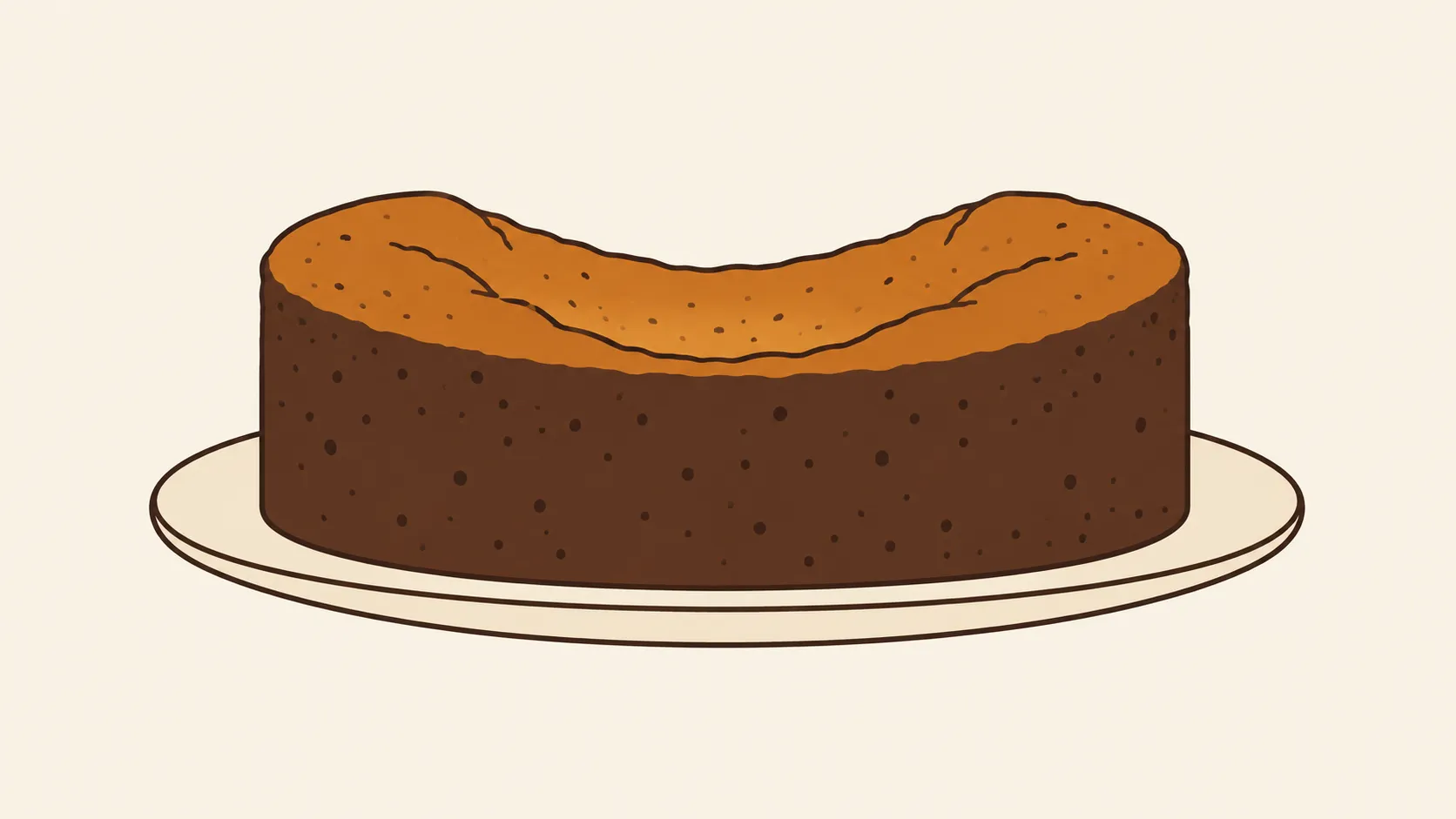
A cake sinks in the middle for one of two reasons. Either it left the oven before the centre had set, so the middle fell as it cooled, or it rose faster than its structure could hold: too much raising agent, an oven running hot, or a door opened in the first twenty minutes. The eight causes below are all versions of those two.
The centre is the last part of a cake to set. Until it does, the middle is a foam of gas held up by wet batter, and anything that lets the gas out, or takes the cake away from the heat too soon, drops it. Once the crumb has set, nothing sinks.
Read the dip before you change anything
| What you see | What happened | Cause |
|---|---|---|
| A wide, shallow dip with a wet or dense layer under it | The centre never set before the cake came out | 1 |
| Rose high, then fell, with a cracked or dark rim and a pale middle | It rose faster than it could hold | 2, 3 |
| A dip on one side only | Uneven heat: a hot spot, or the tin against a wall | 3 |
| Level in the oven, sank on the worktop | Out of the tin, or into a draught, too soon | 8 |
| A layer of fruit at the bottom with a hollow above it | The fruit sank through the batter | 7 |
| Dense, tight crumb, faintly chewy | Over-mixed after the flour went in | 5 |
| Fine crumb, but heavy and gummy | Too much liquid, sugar or fat for the flour, or the wrong tin | 6 |
1. It came out of the oven too early
This is the most common cause, and the one that looks least like a fault. The cake looked finished, the edges were golden, and twenty minutes later the middle had dropped. King Arthur Baking names it as one of the two reasons cakes fall: the structure had not set when the cake left the heat.
Test in the centre, never near the edge, because the edges set first. Push a skewer to the base of the tin: it should come out clean, or with a few damp crumbs on a fudgy cake like the chocolate fudge cake. Press the top with a fingertip: if the dent stays, give it at least five more minutes and test again. A cake that is done has also pulled 3 to 6 mm away from the sides of the tin. If you own a probe thermometer, the centre reads 96 to 99°C when it is baked through.
Every recipe here gives a range, such as 52 to 60 minutes, and says what done looks like. Start testing at the early end, and keep going until two tests agree.
2. Too much raising agent, or the wrong kind
More baking powder does not mean more lift. It means faster lift, and a cake that climbs faster than its crumb can set bursts its own bubbles and comes down again, usually with a coarse, tunnelled crumb and a cracked rim. King Arthur’s other named cause is this one.
The recipes here stay at one to one and a half level teaspoons of baking powder per 150 g of flour, measured level, not heaped. Bicarbonate of soda is stronger and needs an acid to work against, so it only appears beside buttermilk, yoghurt or lemon juice, as in the blueberry and lemon cake. Bicarbonate with nothing to react with gives a soapy taste and a cake that rises and then falls.
Stale powder fails the other way. America’s Test Kitchen baked with baking powder of different ages and got about half the rise from a tin opened ten months earlier. Write the date on the lid when you open it and replace it at six months. Half a teaspoon dropped into hot water should fizz at once; a lazy fizz means a new tin, not a bigger spoonful.
3. The oven is not at the temperature on the dial
Handle the Heat puts most home ovens 15 to 25°F off the dial, about 10 to 15°C, and both directions cause sinking by opposite routes. Too hot, and the crust sets while the middle is still liquid, so the centre drops away from a dark, set rim. Too cool, and the cake rises gently, runs out of gas and subsides before the crumb sets.
An oven thermometer costs less than the ingredients for one cake and settles the question. Preheat for ten minutes past the beep, bake on the middle shelf with the tin clear of the walls, and if the dip is always on the same side, the oven has a hot spot: turn the tin once, after the top has set, which is past the halfway mark.
4. The door
Opening the door drops the oven by 15°C or more, and the cake stops rising while the heat recovers. If the middle has not set, it falls, and it cannot come back. A slammed door can drop a cake outright.
Use the oven light. On a cake baked for 50 minutes, no door for the first 25, and after that a quick look rather than a long one.
5. Over-mixed after the flour went in
Beating flour develops gluten. A little is the net that holds the bubbles; a lot is elastic, and an elastic crumb stretches in the oven and pulls back as it cools, leaving a dip and a tight, faintly chewy texture. Cream the butter and sugar for as long as you like, because that stage is fat and air. Once flour is in, fold until the last streak disappears and stop.
6. Too much liquid, sugar or fat for the flour, or the wrong tin
Sugar and liquid both delay the moment the crumb sets, and fat weakens it. A batter carrying too much of any of them can run out of time: the raising agent finishes, the structure has not set, and the cake settles. It usually happens when someone doubles the milk to make a cake more moist, adds an egg for richness, or measures flour in cups. Weigh everything; a cup of flour varies by up to 30% with how it is scooped.
The tin is part of the recipe. An 8 inch tin holds about four cups of batter and a 9 inch tin about five, so the same batter sits a quarter deeper in the smaller tin and needs longer, and shallower in the larger one and needs less. Every recipe here is written for a 20 cm springform; the tin conversion guide has the arithmetic for anything else.
7. Wet fruit went in bare
Berries, diced apple and pear release water as they heat, and a wet piece of fruit is heavier than the batter around it, so it sinks through the unset foam and drags a dense seam down with it. What you get is a band of fruit at the bottom, a hollow above it, and a perfectly good cake in between.
Toss the fruit in a tablespoon of the recipe’s own flour until it looks dusty, fold it in last with three or four strokes, and keep frozen berries frozen, because thawed ones bleed and weigh more. The blueberry and lemon cake here carries 100 g of berries in the batter that way, and the pear cake cuts its fruit small so the pieces hold their edges.
8. Out of the tin too early, or cooled in a draught
A cake carries on setting as it cools. Straight out of the oven the crumb is still soft and the tin is holding it up. Unclip the ring at five minutes, while the centre is still steaming, and the sides splay and the middle drops.
Twenty minutes in the tin, every time, then the ring off and the cake left on its base until it is cool enough to hold. Cool it somewhere still: a cake next to an open window contracts unevenly and dips or cracks.
What to do with the cake you have
Nothing re-inflates it. The gas has gone and the crumb has set around the dip, so putting it back in the oven only dries it out.
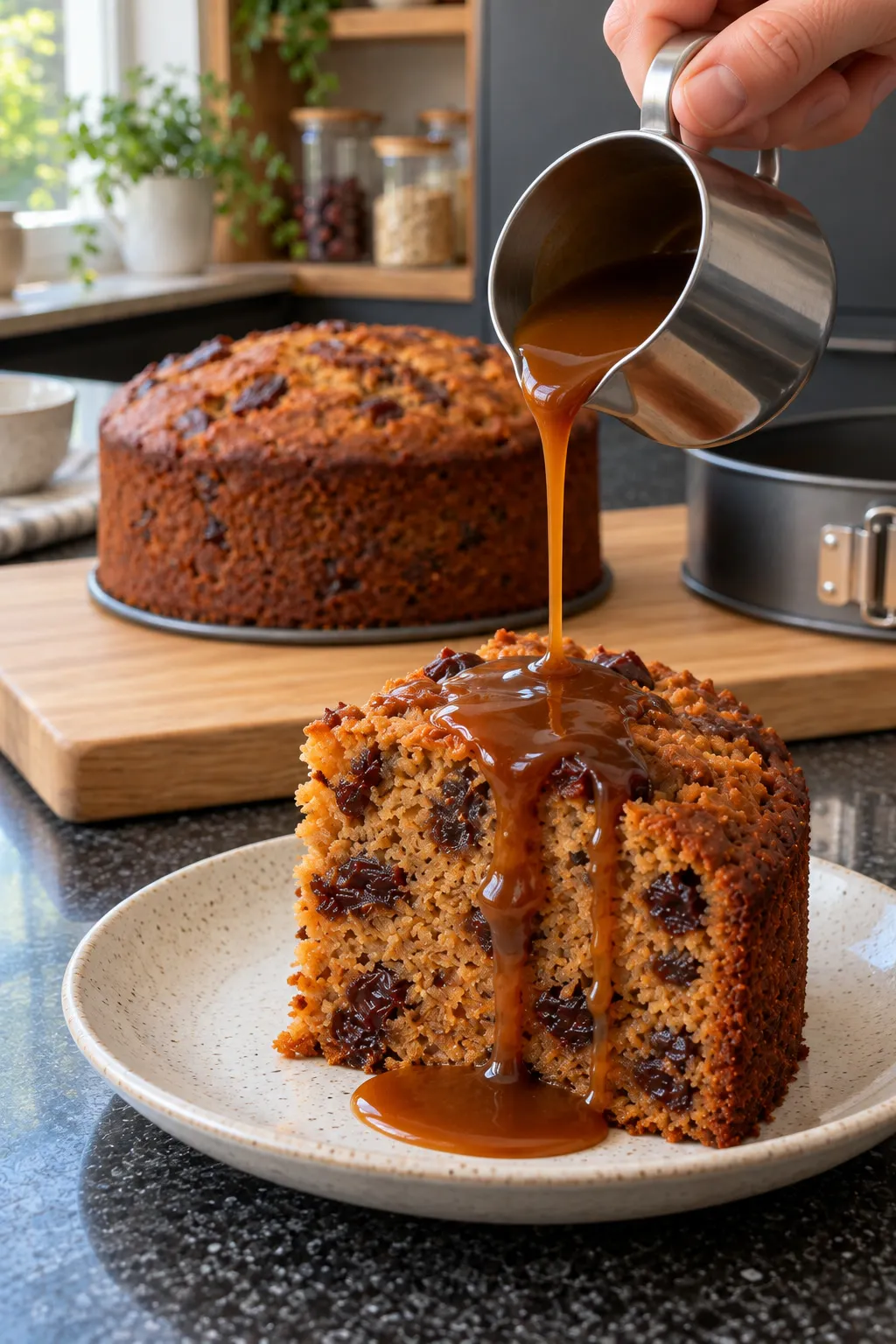
But a sunken middle is a bowl. Fill it with whipped cream and fruit and call it a pudding. Cut wedges from the good ring and serve those. Layer the broken pieces into glasses with cream and fruit as a trifle. Or do what every recipe here does anyway and pour a warm sauce over each slice: a dip is where a salted caramel wants to pool.
One exception. If the middle is wet batter rather than sunken crumb, the cake is raw, not collapsed. That is a different fault with a different rescue, in why is my cake raw in the middle.
Where this comes from
- King Arthur Baking, Why did my cake fall flat?: the two causes, too much leavening and taking the cake out too early, and the spring-back and pulling-away tests.
- Handle the Heat, How to prevent cakes and cupcakes from sinking: ovens 15 to 25°F off the dial, a finished centre at 205 to 210°F, the oven light, weighing, and tin volumes.
- America’s Test Kitchen, baking powder shelf life: about half the rise at ten months, replace at six.
- The house rules every recipe on this site is checked against: the raising agent ceiling, floured fruit and twenty minutes in the tin.