Technique · 7 min read
How to make salted caramel that never seizes
Sugar melted on its own to dark amber, then butter, warm cream and salt off the heat. The three things that go wrong, and the fix for each, in the order they happen.
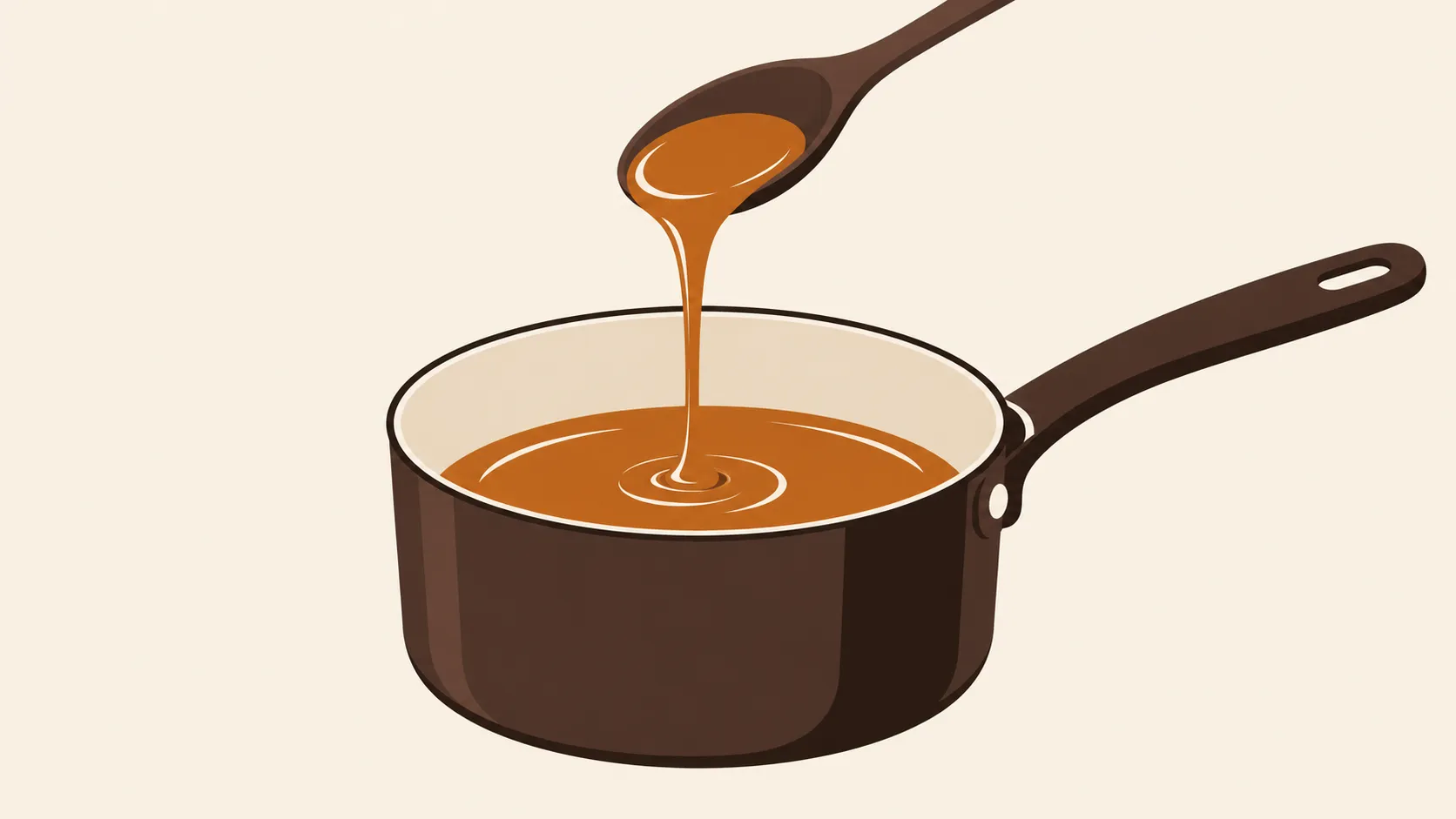
Salted caramel sauce is sugar melted on its own until it is dark amber, then butter, warm cream and salt whisked in off the heat. Three things go wrong: the sugar crystallises while it melts, the sauce seizes into a lump when the dairy goes in, or it splits afterwards. All three have a fix. Burning does not, and it happens in the last thirty seconds, which is why the whole method is about knowing when to stop.
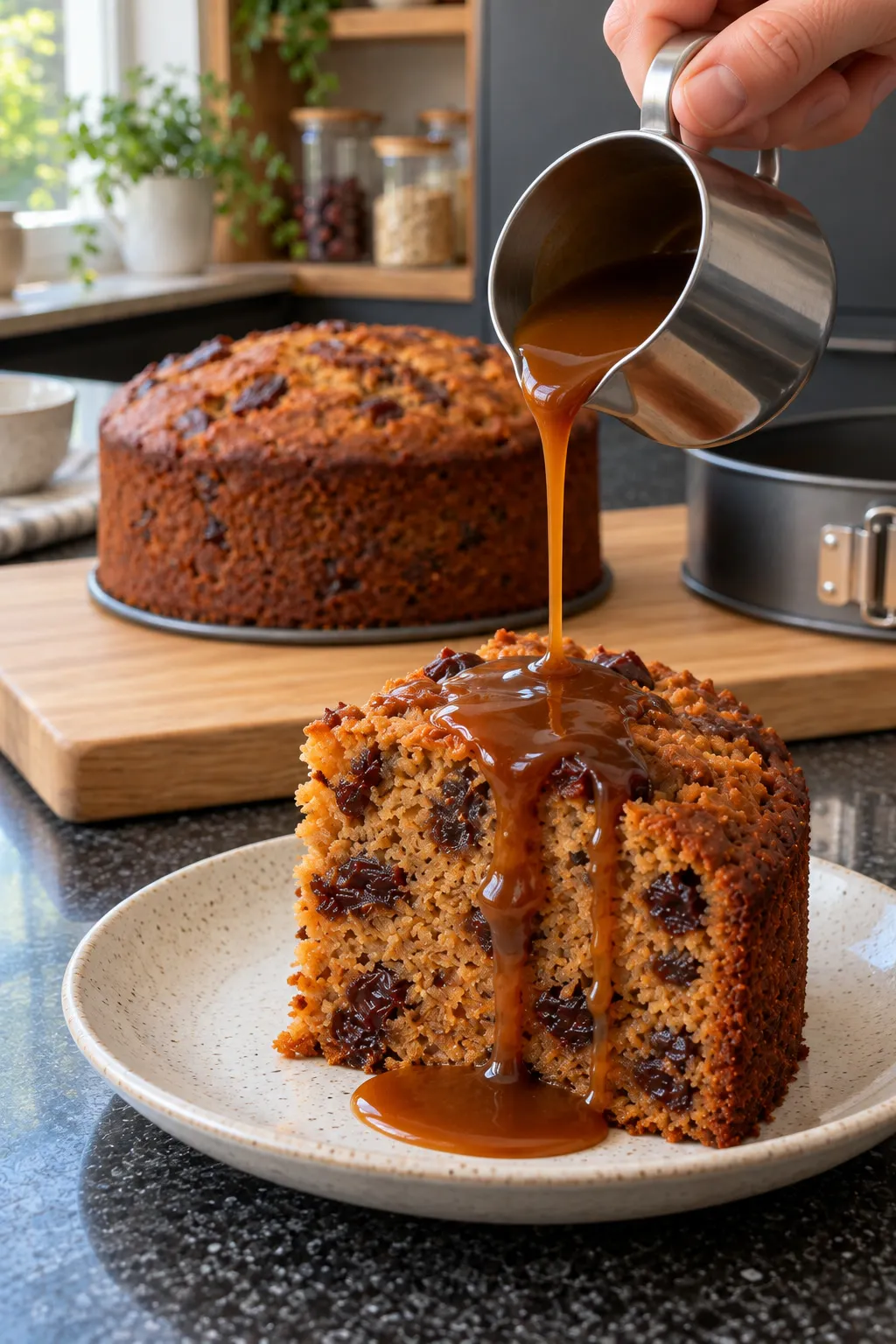
The sauce on this site is 200 g of caster sugar, 90 g of butter, 120 ml of double cream and a teaspoon of flaky salt, and it goes over every slice of the chocolate fudge cake. The pear cake uses a looser version made the same way.
Dry or wet
A wet caramel dissolves the sugar in water first. King Arthur Baking recommends it for a first attempt, because the sugar is evenly wet and has a bigger margin for error before it burns. A dry caramel melts the sugar alone: faster, and what the recipes here use, but it browns unevenly if you leave it, and it goes from golden to burnt quickly. Everything below is the dry method; the stages and the fixes are the same for both.
The four stages, by eye
Put 200 g of caster sugar in a heavy-based pan over a medium heat and do not stir it. Then watch for:
- Clear edges, white middle, after 2 to 3 minutes. The sugar at the rim liquefies first. Swirl the pan, and keep the spoon out of it.
- A pale straw syrup with a few lumps, at 4 to 5 minutes. Keep swirling and the lumps dissolve.
- Golden, and smelling sweet, at 6 to 7 minutes. This is where nervous cooks stop, and it tastes only of sugar.
- Deep amber, the colour of an old penny, with the first wisp of smoke, at 7 to 9 minutes. Off the heat at once.
Sugar starts to caramelise at about 160°C, and the colour comes on fast from there: light caramel is 163 to 171°C, dark amber 177 to 182°C, and past about 190°C it is bitter and beyond rescue. The last stage takes under a minute, and the pan keeps darkening after it leaves the heat, because the reaction gives off heat of its own. Take it off a shade before the colour you want. If you use a thermometer, keep the probe in the liquid and off the metal, which reads higher; 200 g of sugar is only a few millimetres deep.
Stage four is the point. A pale caramel tastes of golden syrup; the dark one has a controlled bitterness that the salt sharpens, and that is what makes the sauce taste of caramel rather than of sugar.
Finishing the sauce
Off the heat, whisk in the butter a cube at a time. It bubbles hard, because the water in the butter is hitting sugar at 180°C, and a cube at a time spreads that over half a minute instead of one eruption. Then the cream, warmed first, poured in two or three goes while you whisk. Last, the salt: a teaspoon of flakes, or half a teaspoon of fine salt, off the heat. Taste it warm, because hot sugar mutes salt.
Warm the cream. Cold cream into hot caramel is the single most common cause of a seized sauce: where they meet, the sugar drops below its setting point faster than you can stir, and it sets hard. ThermoWorks puts the cream at 50 to 60°C, steaming but not simmering, and adds it in three additions with a whisk over a low heat. Use a pan far bigger than the sugar needs; the cream can double the volume for a few seconds.
When it seizes
Sooner or later it clenches into an amber lump with butter floating on top. It looks ruined and it is not. Put the pan back over the lowest heat you have and keep whisking: the lump re-melts within a minute or two and the sauce comes back together. If it stays stubborn, a tablespoon of hot water loosens it. Seizing is a cold shock, and only gentle heat undoes it.
Burnt is the one failure with no fix. Acrid, thin, black at the edges: pour it away, fill the pan with water and boil it clean, and start again. Two hundred grams of sugar costs almost nothing.
When it splits
A split sauce is smooth but has a slick of clear fat on top and feels grainy on the tongue. The emulsion has failed, usually because the butter went in too fast, the sauce boiled after the cream was in, or it reduced so far that too little water was left to hold the fat.
Let the pan cool for a minute off the heat, then whisk in a tablespoon of hot water, working from the middle outwards, and a second only once the first has gone in. If whisking will not do it, thirty seconds with a stick blender submerged brings it back glossy.
Too thin, or too thick
Judge it cold, not in the pan. Hot caramel pours like single cream and sets nearer honey. Drop a teaspoon onto a cold saucer, chill it for three minutes, and that is tomorrow’s texture.
Too thin cold, running off the slice: simmer gently for three to five minutes, stirring, and test again; if it is still slack, 20 g of butter whisked in off the heat firms it. Too thick cold, coming out of the jar in a lump: that is normal, and it pours again warmed. If it is stiff even warm, whisk in cream or milk over a low heat, a tablespoon at a time.
Why it crystallises, and how to stop it
One sugar crystal on the side of the pan can seed the syrup and turn the whole thing back to sand. King Arthur’s four defences: swirl rather than stir once the sugar is melting, because a spoon carries crystals from the wall into the liquid; brush the sides down with a wet pastry brush; put a lid on for a minute so the steam washes the sides; or add an acid or an invert sugar at the start, which is why a quarter teaspoon of lemon juice or a teaspoon of golden syrup in the sugar is insurance rather than cheating. Crystals form while the sugar melts, before any dairy is near it, which is what separates this fault from seizing.
Scaling the batch
Hold the ratio, 200 g sugar to 90 g butter to 120 ml cream, and let the pan set the limit. Two hundred grams of dry sugar in a 20 cm pan is a layer about 7 mm deep, shallow enough to melt at one rate. Double it and use a 24 to 26 cm pan rather than a deeper layer in the same one, and expect 10 to 13 minutes to the colour. Halve it and use a 16 cm pan and do not leave it: 100 g goes from gold to burnt in twenty seconds. Beyond 400 g, two batches, because the edges darken before the middle has melted. A double batch holds its heat longer, so stand it off the heat for a full minute before the butter goes in.
Storing it
Two weeks in a clean jar in the fridge. It sets firm when cold, so warm it in a pan, or thirty seconds in the microwave, stirring, and it pours again. Blast a jar for two minutes and it splits at the edges.
Make a double batch. It goes on every cake in the caramel and coffee flavour, on ice cream, and on a spoon at eleven at night.
Where this comes from
- King Arthur Baking, How to make caramel: wet caramel as the forgiving method, the four defences against crystals, heating the liquids first, the bubbling, boiling the pan clean.
- ThermoWorks, How to make caramel: temperature guide: caramelisation from 160°C, the reaction giving off its own heat, cream at 50 to 60°C in three additions.
- The Flavor Bender, cooked sugar stages chart: light caramel 163 to 171°C, dark 177 to 182°C, and the darkening after the pan leaves the heat.
- The quantities are the sauce as published in the recipes on this site.