Technique · 7 min read
How to make a cake more moist
Take it out of the oven earlier, swap part of the butter for oil, keep the sugar, and stop mixing when the flour disappears. Adding more milk, the fix most people try first, makes a flatter cake, not a moister one.
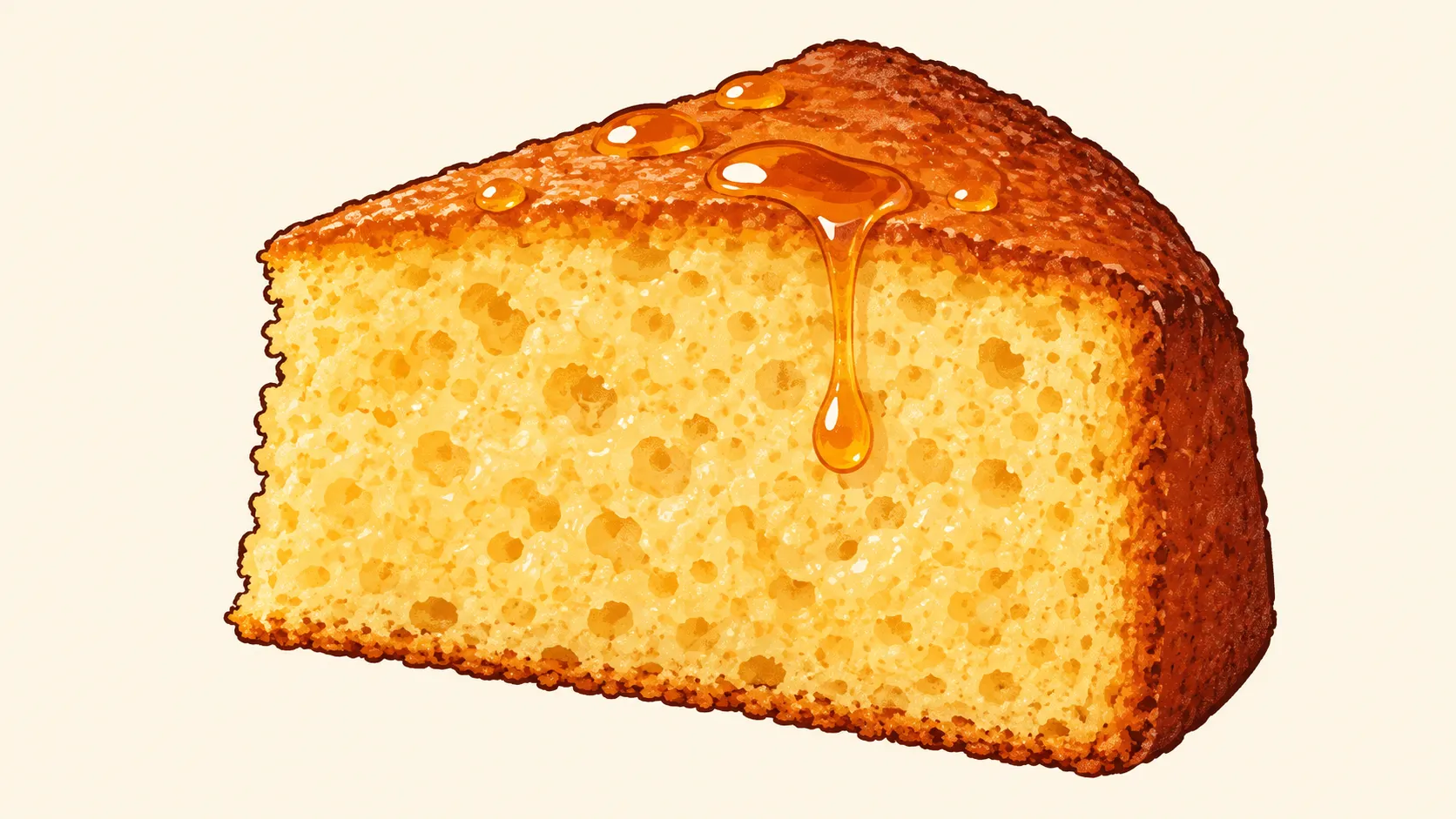
The fastest way to make a cake more moist is to take it out of the oven earlier. After that: swap part of the butter for oil, use buttermilk or yoghurt where a recipe says milk, keep the sugar, stop mixing the moment the flour disappears, and brush a warm cake with syrup if it still needs help. Adding more milk or water, the change most people try first, evaporates in the oven and weakens the crumb, so the cake comes out flatter and no moister.
What your mouth reads as moist is mostly fat and sugar, not water. Fat coats the flour and keeps the crumb soft; sugar holds on to water and will not give it up to the oven. Most of the plain water in a batter leaves as steam. That is why the changes below are about fat, sugar and time, and only one of them is about liquid.
1. Stop baking it for so long
This fixes more dry cakes than everything else on this page together. A cake loses water the whole time it is in the oven, and in the last five minutes, once the centre has set, it is losing water for nothing. Five minutes past done is the difference between tender and dusty, and it is invisible from the outside, because the colour barely changes.
Learn what done looks like for the cake in front of you. A plain sponge is done when a skewer from the centre comes out clean and the top springs back under a fingertip. A fudgy cake, like the chocolate fudge cake, is done when the skewer comes out with a few damp crumbs; wait for clean and you have gone too far. The edges have pulled 3 to 6 mm away from the tin either way. Start testing at the earliest time the recipe gives. If it says 52 to 60 minutes, open the door at 50. And the hot tin keeps cooking the cake for several minutes after it leaves the oven, so take it out a shade before you think you should.
2. Swap part of the butter for oil
Butter is about 18% water, and that water leaves in the oven. Oil is all fat, and it stays liquid at room temperature, where butter sets solid. King Arthur Baking reformulated several of its butter cakes for this reason: the oil keeps more fat in the finished crumb, it coats the flour evenly so the cake stays tender even when the batter has been over-beaten, and the cake is still soft on day three when an all-butter one has firmed up.
Their swap is a quarter of the butter, by volume, for a neutral oil, added with the butter and sugar and creamed as usual. For a recipe with 200 g of butter, that is 150 g of butter and 50 ml of oil. You keep most of the butter’s flavour and lose most of the firmness. Go further for a cake that will be eaten cold. The apple cinnamon cake and the pumpkin spice cake here are all oil, and both are better on day two than on the day they were baked.
3. Use buttermilk or yoghurt, not more milk
Buttermilk, yoghurt and soured cream bring fat, and they bring acid, which softens the gluten so the crumb is more tender. They are also thick, so a batter can carry more of them without going slack. Milk brings water and a little fat, and thins the batter, which is why adding more of it fails.
Replace the milk in a recipe with the same weight of buttermilk or full-fat yoghurt. Then match the raising agent, because the acid needs bicarbonate of soda to react with: the recipes here that use buttermilk carry a quarter to half a teaspoon of bicarbonate beside their baking powder, as in the blueberry and lemon cake with its 120 g of buttermilk and 50 ml of lemon juice. Leave the bicarbonate out and the acid sits there tasting sour.
4. Keep the sugar
Sugar holds water. King Arthur’s reduced-sugar baking tests found that cutting it leaves a cake drier and more crumbly, paler, because sugar drives the browning, blander, because sugar carries the other flavours, and quicker to stale. Chocolate cakes suffer soonest, because the sugar is also balancing the cocoa’s bitterness.
If a cake tastes too sweet, cut the sugar by a tenth at most and bake it once before going further. Or leave it and change the balance instead: more salt, lemon zest, a sharper sauce. Soft light brown sugar in place of some of the white keeps a cake softer for longer, and the apple and pumpkin cakes here are built on it.
5. Stop mixing when the flour disappears
Every stroke after the flour goes in develops more gluten, and a tight crumb squeezes out moisture as it bakes and reads as dry even when the cake holds plenty of water. Cream the butter and sugar for as long as you like; that stage is only fat and air. Once the flour is in, fold until the last streak disappears and put the spatula down. Plain flour rather than strong bread flour, for the same reason: less protein, less gluten, softer crumb.
6. Soak it, if it needs rescuing
A syrup brushed over a warm cake is what professional kitchens do, and it works on a cake that is already baked and already a little dry. Warm equal weights of sugar and water until the sugar dissolves, add a flavour if you want one, and brush it over the cake while both are warm. Warm crumb drinks; cold crumb lets syrup pool on top. About 100 ml for a 20 cm cake, in two or three passes.
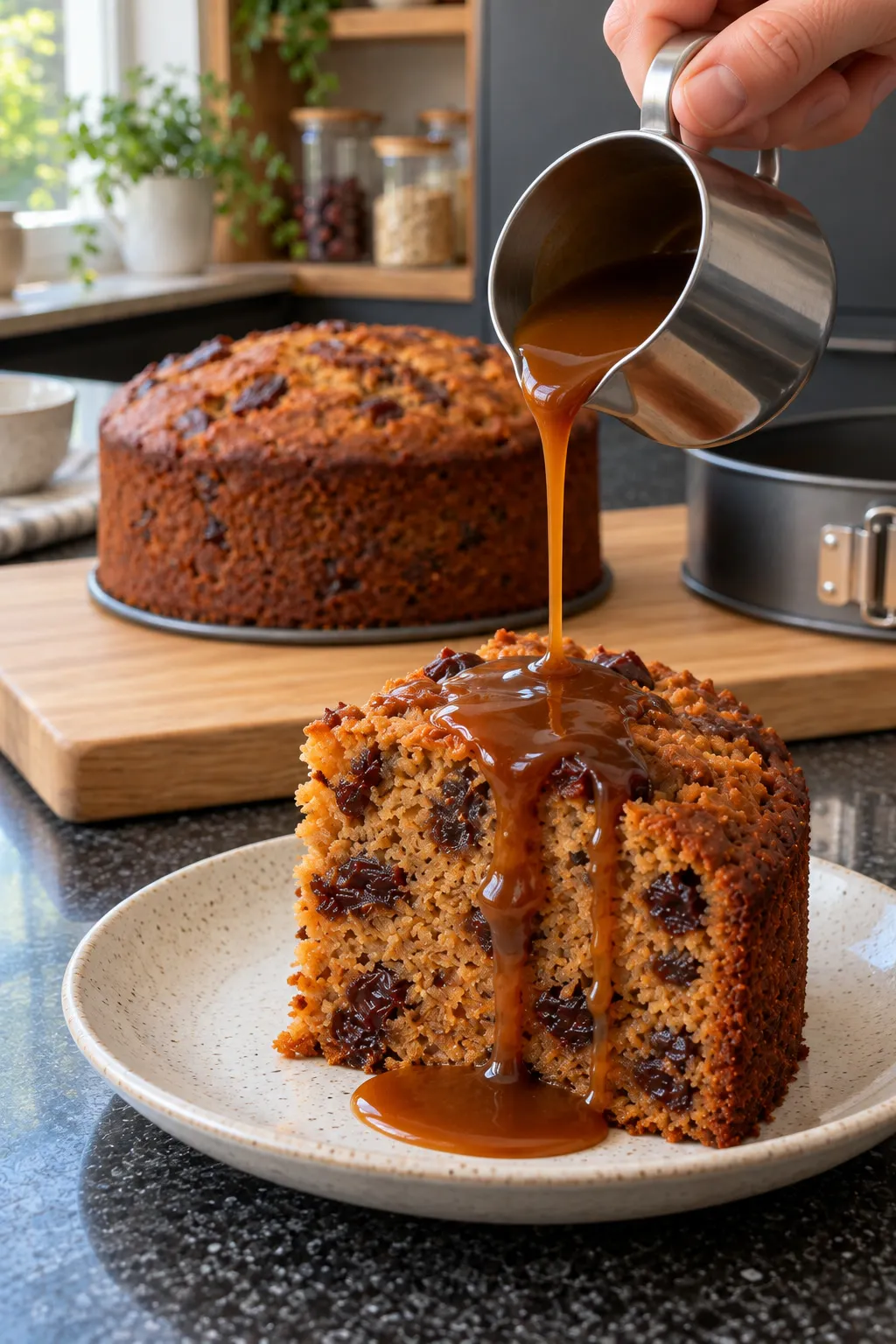
Every recipe here does a version of this at the table, which is why each one finishes with a sauce poured over the slice. A warm salted caramel, a lemon curd or a blueberry sauce soaks into the cut face and solves dryness on the plate rather than in the recipe.
The two changes that make it worse
More milk or water. It leaves as steam, the batter it leaves behind is weaker, and a weaker batter sinks. If a batter genuinely looks too stiff, add yoghurt or oil rather than water.
An extra egg. Egg white is mostly water and protein, and the protein sets firm, so an extra whole egg makes a cake springier and a little tougher. An extra yolk is different: fat and emulsifier, and one extra yolk in a 20 cm cake does soften the crumb.
Keeping it moist after it is baked
A cake that was moist on the day and dry on day two was usually stored badly rather than baked badly. King Arthur’s advice for a plain cake is room temperature, airtight, for two to three days; the fridge keeps it up to a week, but cold sets the butter in the crumb, so a slice straight from the fridge eats as dry even when it is not. Let it stand for twenty minutes first. Oil cakes mind the fridge less.
Cool it completely before covering it, or the trapped steam makes the top sticky while the inside carries on drying. Once it is cut, press baking paper or cling film directly against the cut face, which is where a cake loses water fastest. For longer than three or four days, freeze it, wrapped tightly, whole or in slices.
If you change one thing
Take it out earlier. Buy an oven thermometer so the temperature is what the recipe meant, start testing at the earliest time the recipe gives, and pull the cake when the skewer shows a few damp crumbs rather than waiting for spotless. None of the rest will save a cake that spent an extra eight minutes at 190°C.
If your problem is the reverse, a cake wet in the centre rather than dry, that is a different fault, covered in why is my cake raw in the middle.
Where this comes from
- King Arthur Baking, The key to making a cake with the moist texture of a boxed mix: butter at 18% water, oil coating the flour, the quarter-by-volume swap.
- King Arthur Baking, Baking with reduced sugar: what cutting sugar does to moisture, browning, flavour and keeping.
- King Arthur Baking, How long does cake last in the fridge?: two to three days at room temperature, up to a week in the fridge, wrap against the cut face.
- King Arthur Baking, How to tell when cake is done: the tests in section 1.