Pear Cake with Caramel Sauce
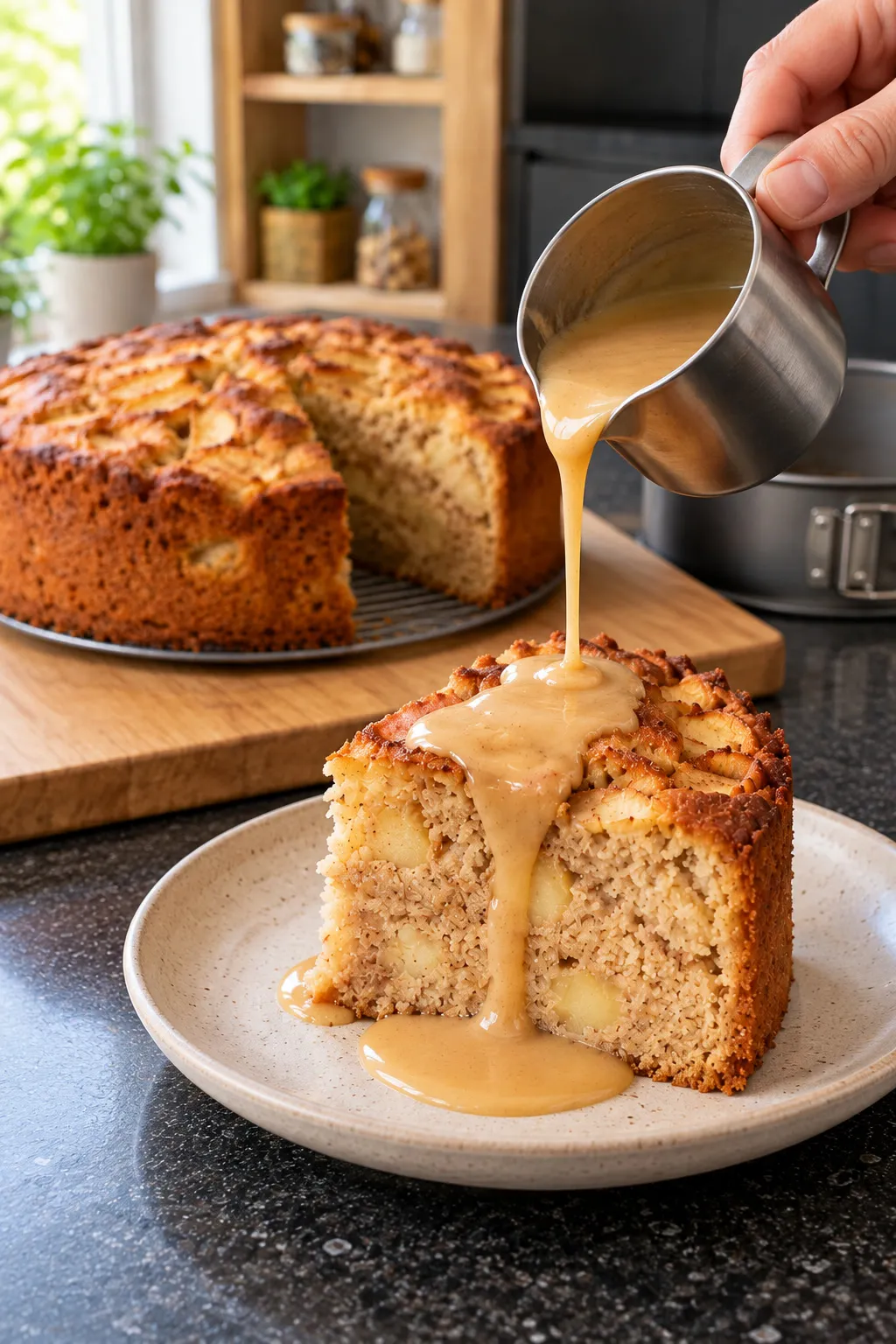
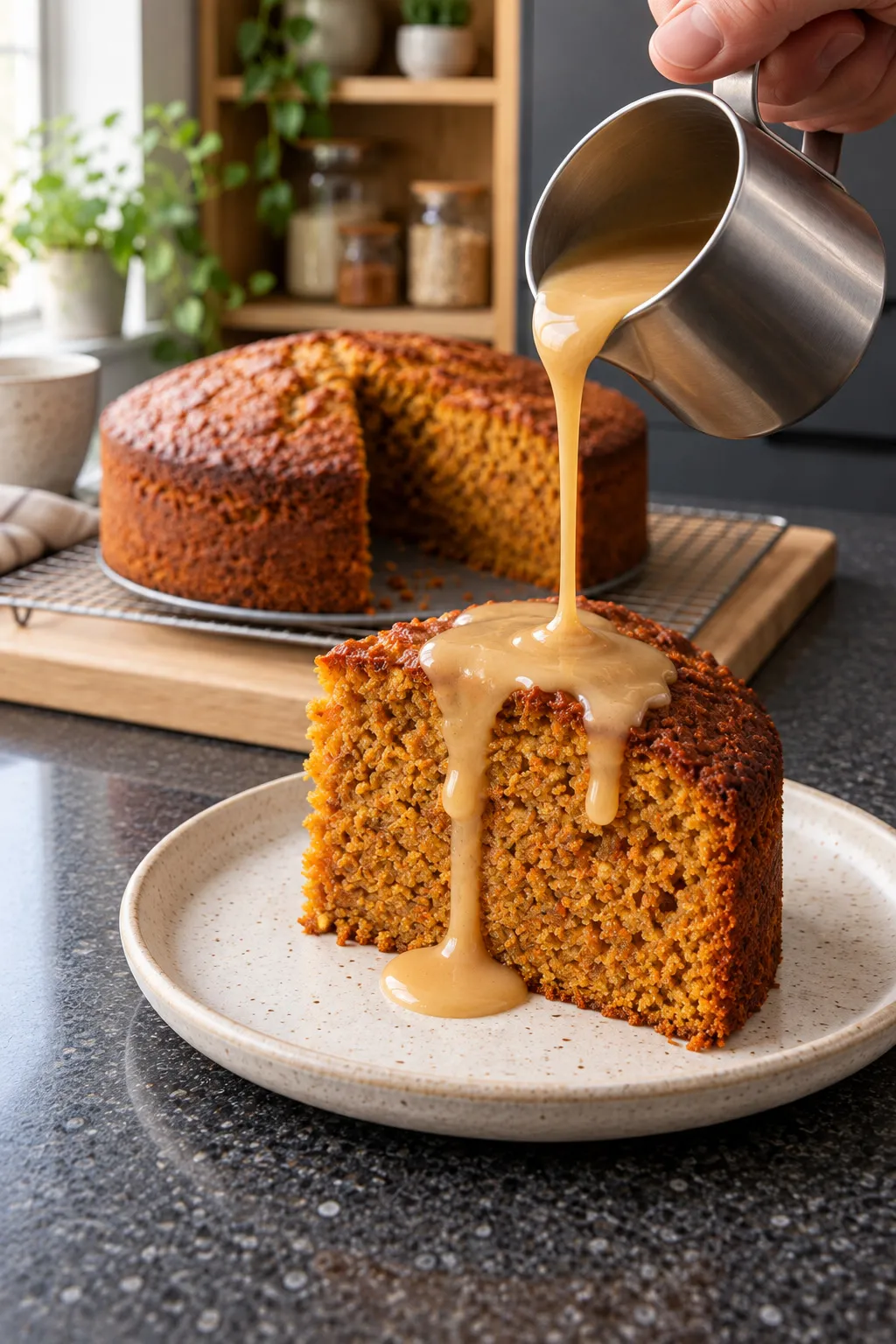
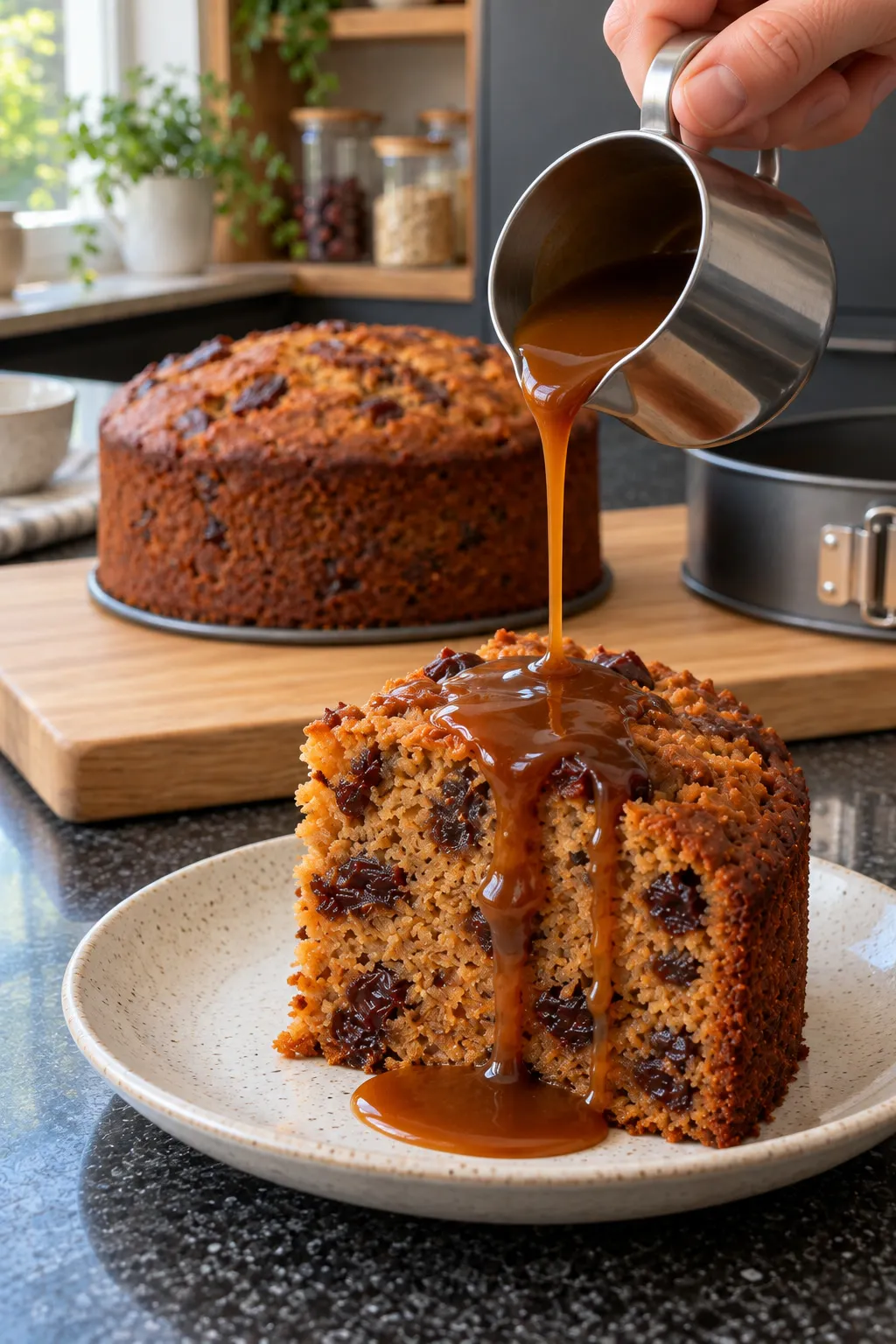
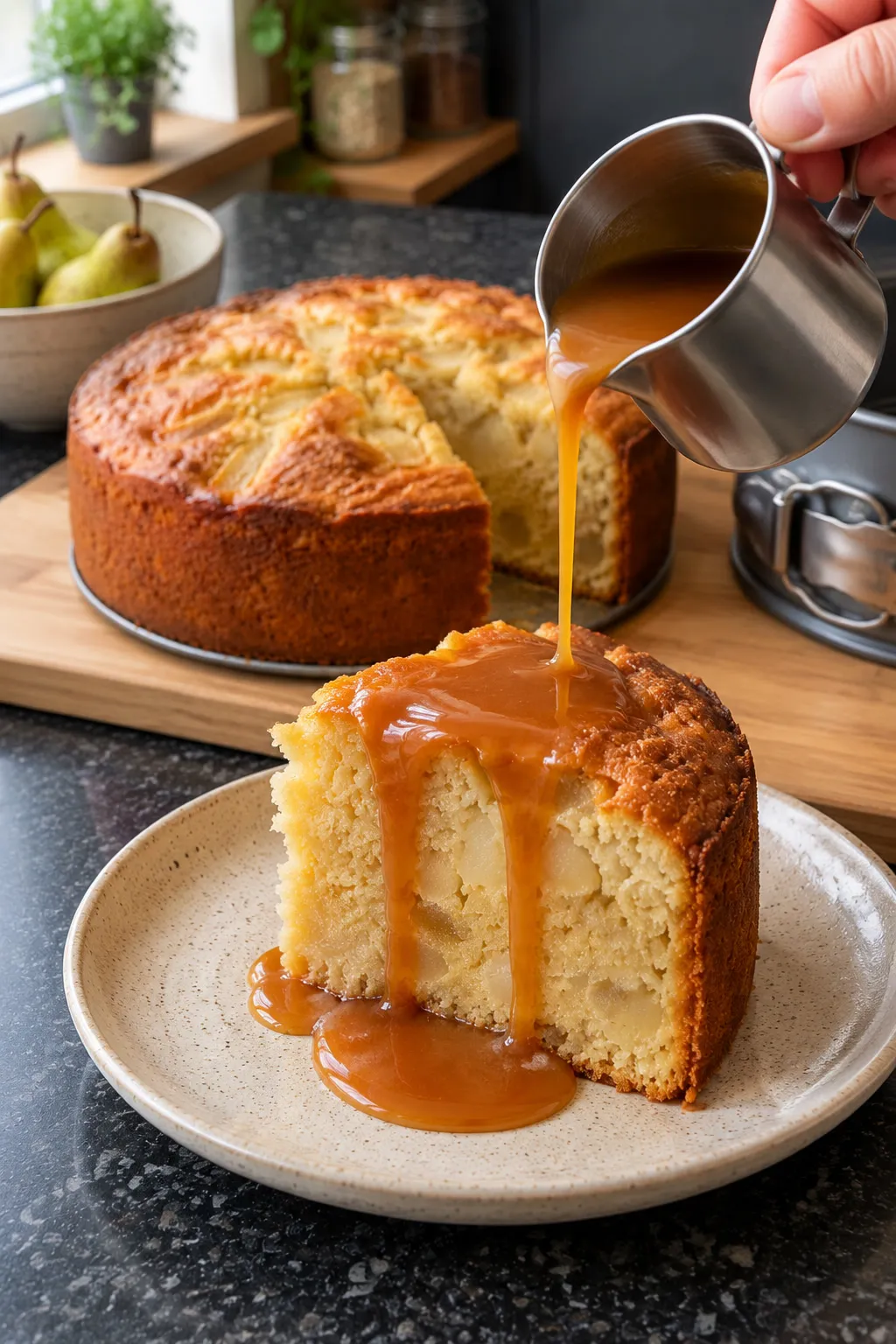
Soft pieces of ripe pear sit in a buttery, golden sponge, served in thick slices with warm caramel sauce poured over at the table.
- Total
- 1 hr 20 min
- Prep
- 25 min
- Bake
- 55 min
- Level
- Medium
- Serves
- 10
- Tin
- 20 cm springform
This pear cake has a light, buttery sponge packed with pieces of ripe pear. The fruit softens as it bakes and leaves little pockets of moisture through the pale golden crumb. Warm caramel sauce brings a darker, buttery sweetness without making the cake itself too heavy.
Choose pears that give slightly when pressed near the stem but still hold their shape when cut. Very soft pears release more juice during baking, which can leave a wet patch around the fruit.
Ingredients
For one 20 cm springform, serves 10
For the cake
For the caramel sauce
You will need
- 20 cm round springform cake tin
- Baking parchment
- Large mixing bowl
- Electric hand whisk
- Fine sieve
- Flexible spatula
- Small heavy-based saucepan
- Heatproof spoon
- Wire cooling rack
- Cake skewer
- Small heatproof jug
Oven
175°C fan 155°C 345°F
Method
Oven 175°C · fan 155°C · 345°F
Prepare the tin and pears
Heat the oven to 175C, 155C fan. Grease the springform tin and line its base and sides with baking parchment. Peel and core the pears, then cut them into small, fairly even pieces. They should hold their edges rather than collapse when handled. Melt the butter and leave it to cool until it feels barely warm.
Whisk the eggs and sugar
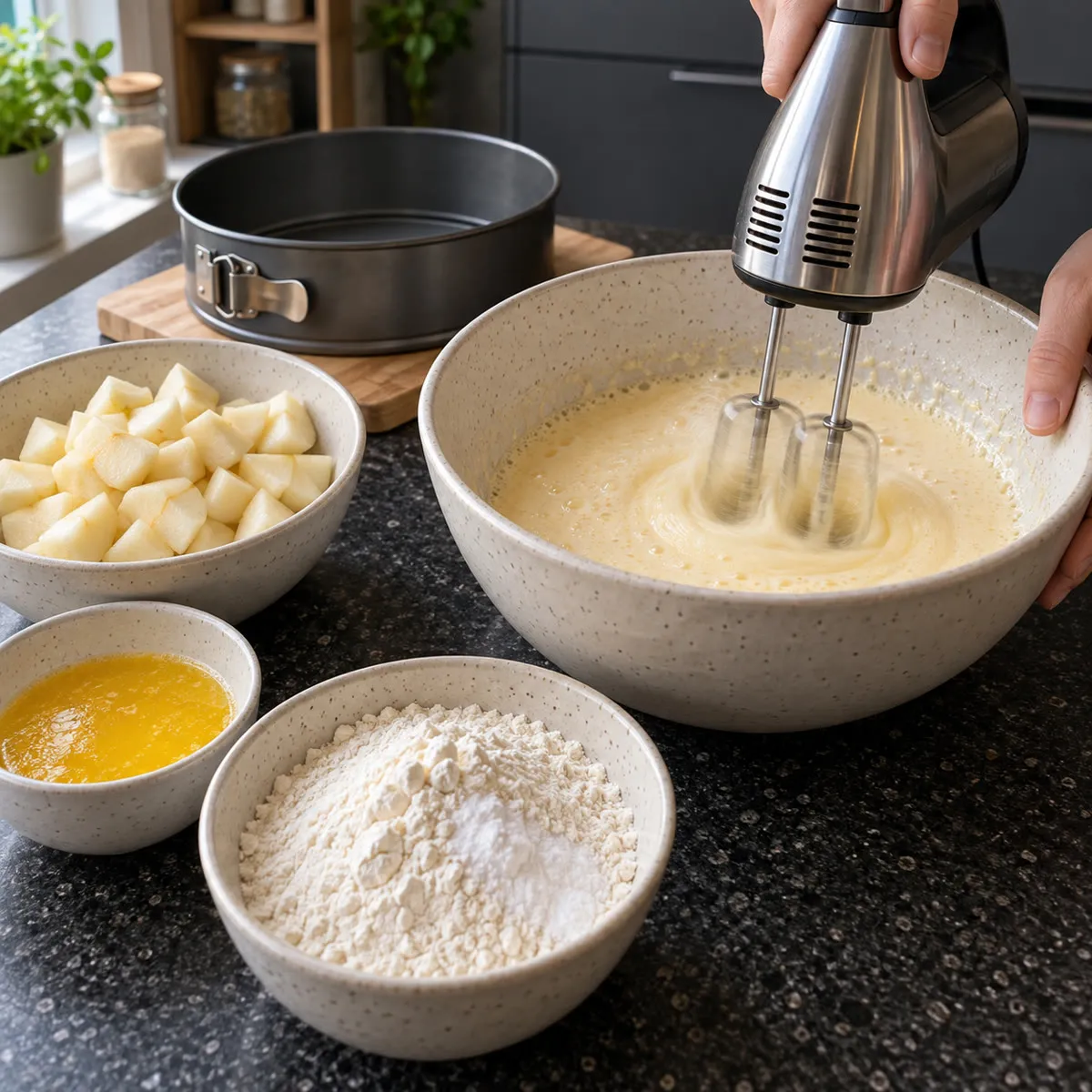
Put the eggs and caster sugar into a large mixing bowl. Beat with an electric hand whisk until the mixture looks pale, thick and foamy. When the beaters are lifted, the mixture should fall back in a ribbon that remains visible briefly before disappearing.
Fold in the remaining cake ingredients
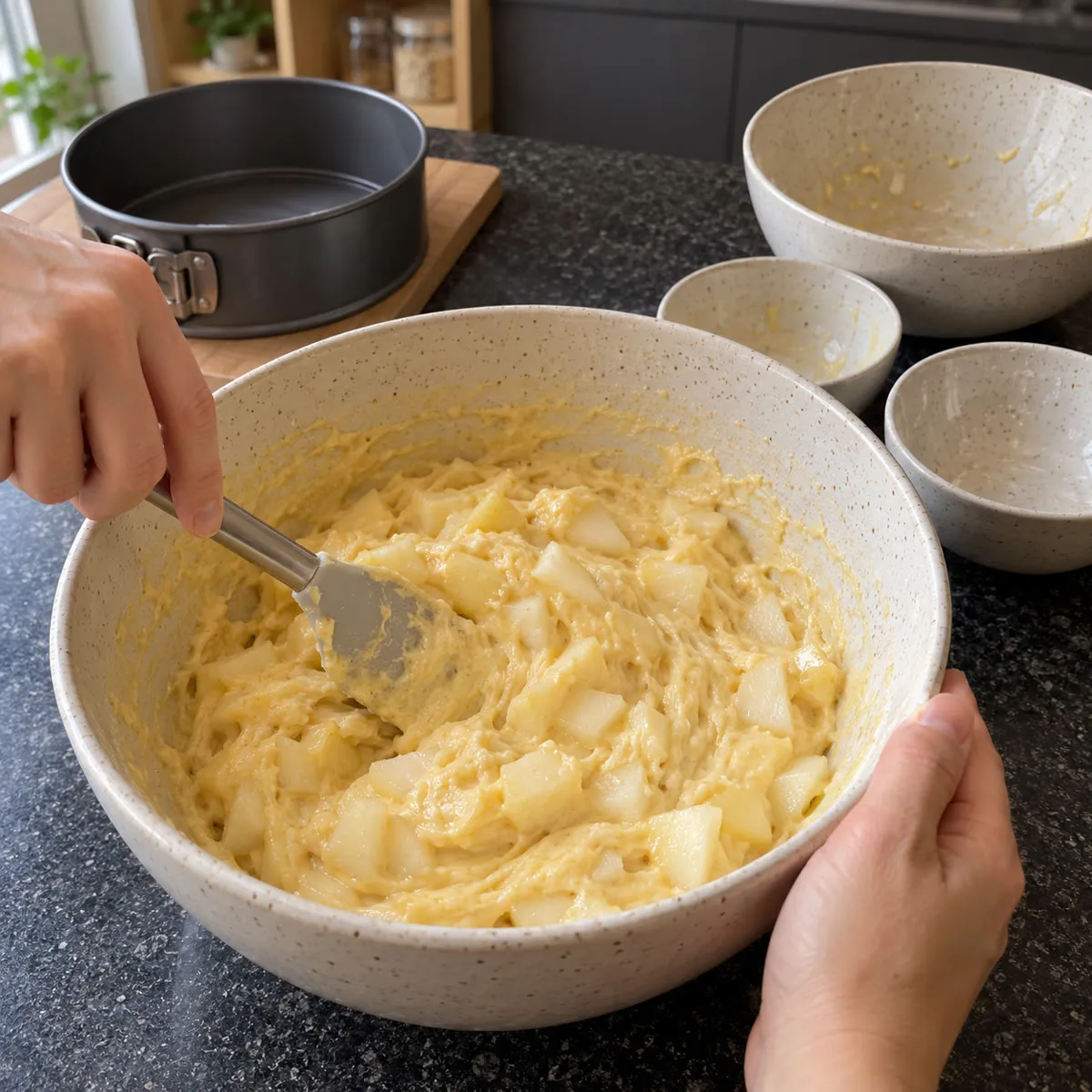
Pour the cooled melted butter into the egg mixture and fold gently with a spatula. Sift in the plain flour, baking powder and fine salt, then fold until no dry patches remain. Add the chopped pears and turn the mixture over gently until the fruit is distributed throughout. The finished batter should be thick and pale, with plenty of pear pieces visible.
Fill the springform tin
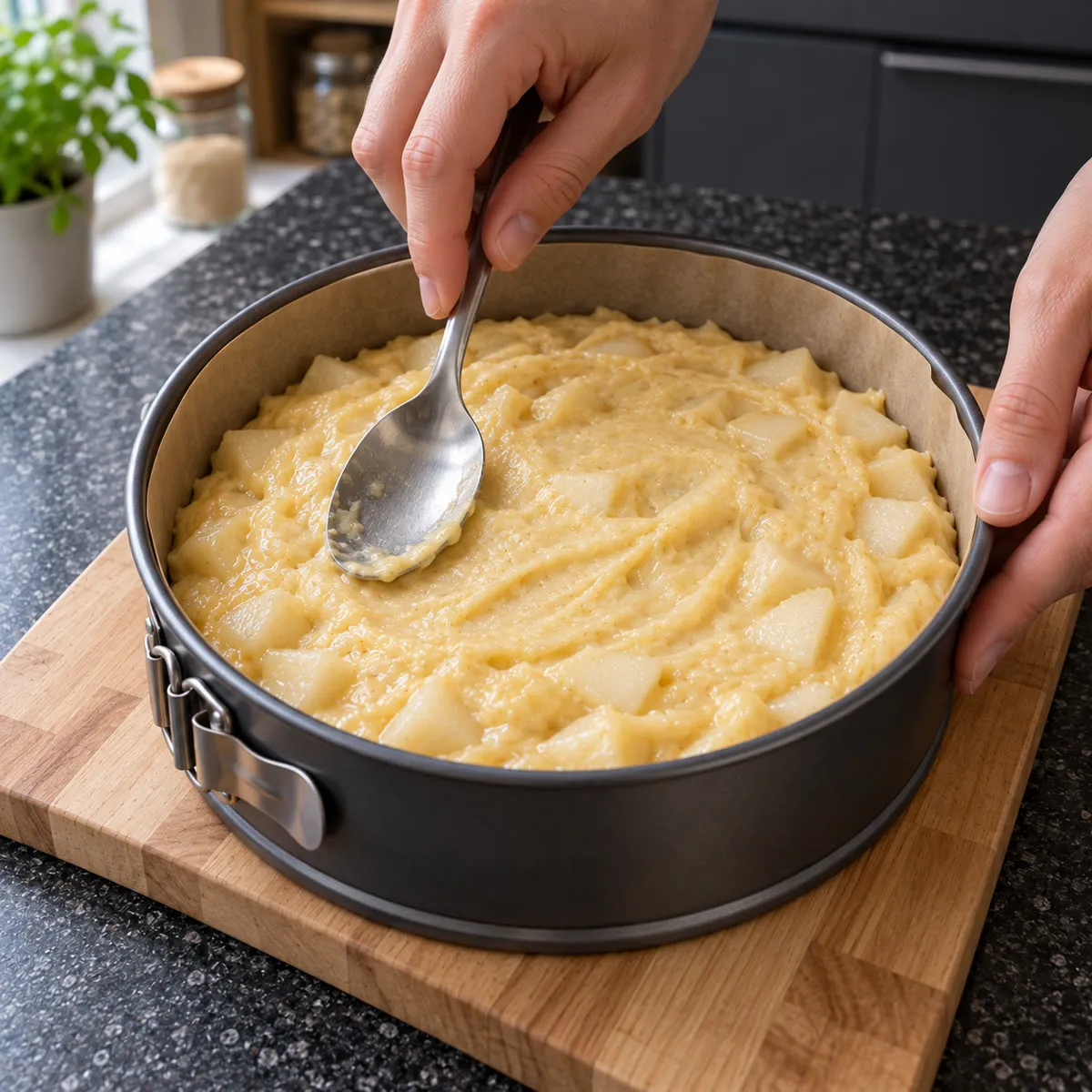
Spoon the batter into the prepared tin, scraping the bowl to collect the fruit at the bottom. Spread it into the corners and level the surface with the spatula. The batter should sit in a thick, even layer, with small pieces of pear visible across the top.
Bake the pear cake
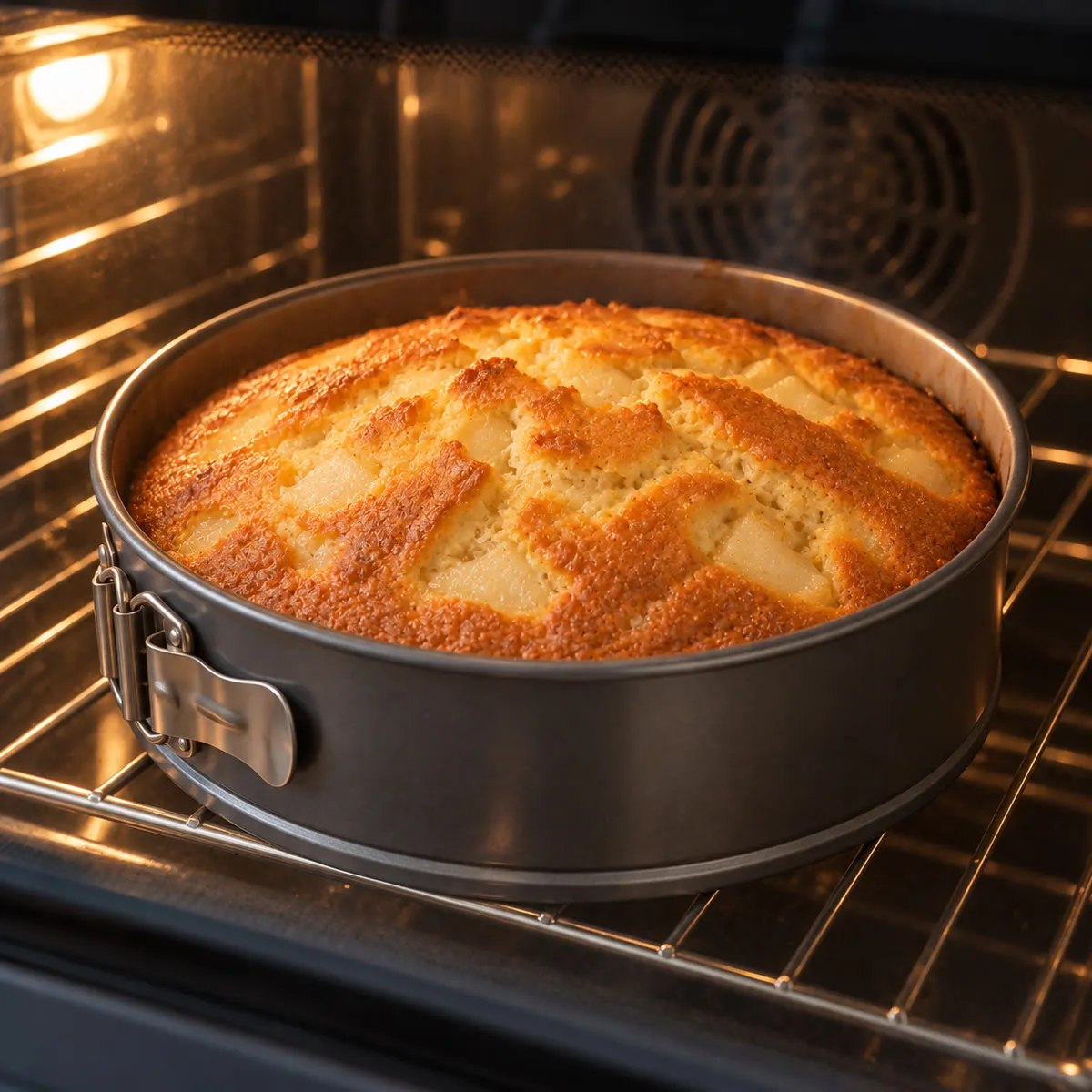
Place the tin on the middle shelf of the oven. Bake for 50 to 60 minutes, checking towards the end. The cake should be deep golden on top, with a gentle dome and a few small cracks. A skewer pushed into the middle comes out with a few damp crumbs, and the top springs back when lightly pressed. If the surface colours too quickly before the centre is ready, cover it loosely with foil.
Cool and release the cake
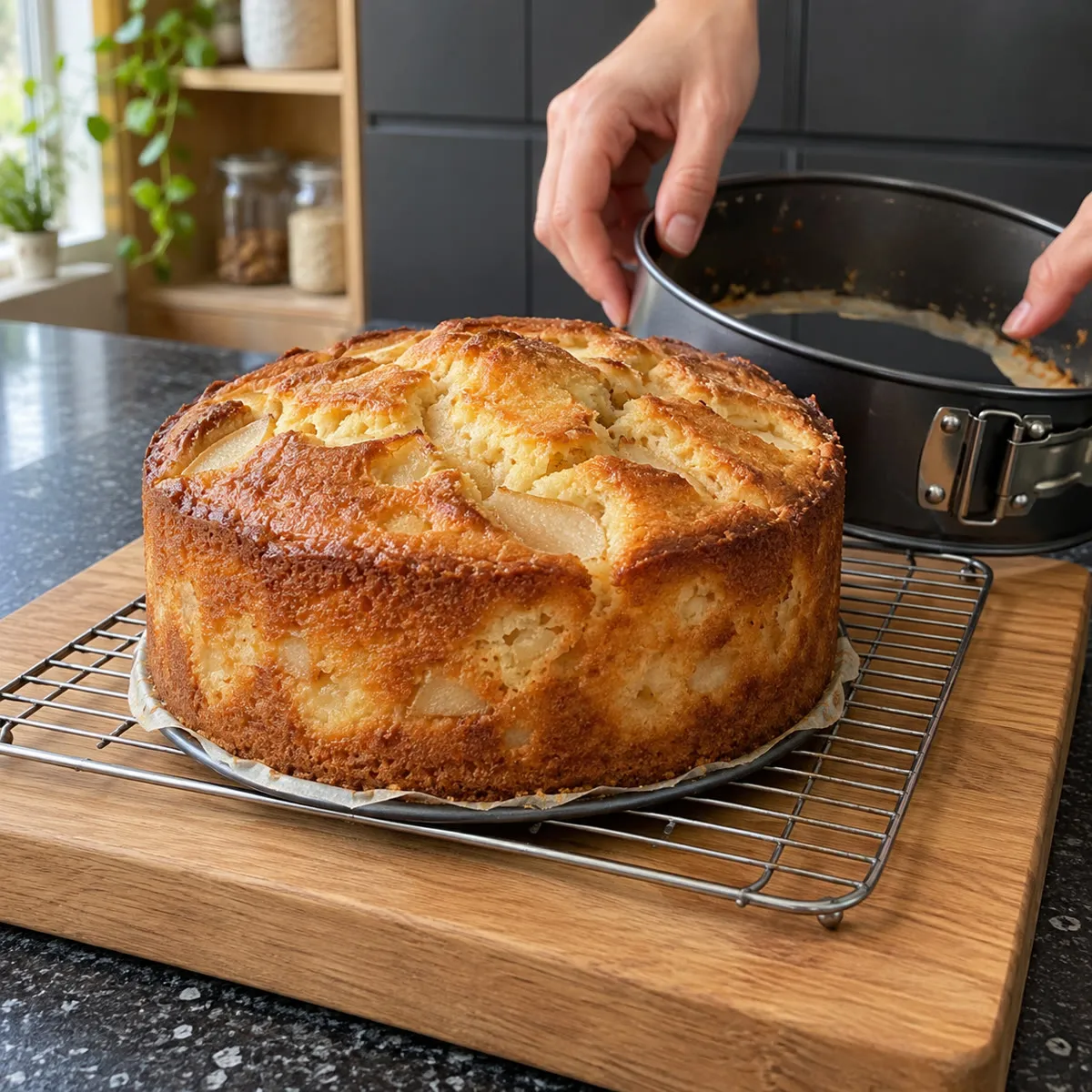
Leave the cake for 20 minutes in the tin, then carefully open the springform ring and lift it away. Peel back the side parchment and transfer the cake, still on its base, to a wire rack to finish cooling. The sides should feel set and hold their shape, while the top remains gently rounded. Let it cool for a further 20 minutes before cutting.
Make the caramel sauce
While the cake cools, spread the caster sugar for the sauce evenly across the base of a small heavy-based saucepan. Set it over a medium-low heat and let the sugar melt, gently swirling the pan as clear patches appear. Once all the sugar has dissolved and turned a rich amber colour, take the pan off the heat. Add the cubed butter and stir carefully until incorporated. Slowly pour in the double cream, stirring as the mixture bubbles up, then add the sea salt. Return to a low heat briefly if needed, stirring until the sauce is smooth and glossy. Transfer it to a heatproof jug and leave it until warm and pourable.
Cut and serve
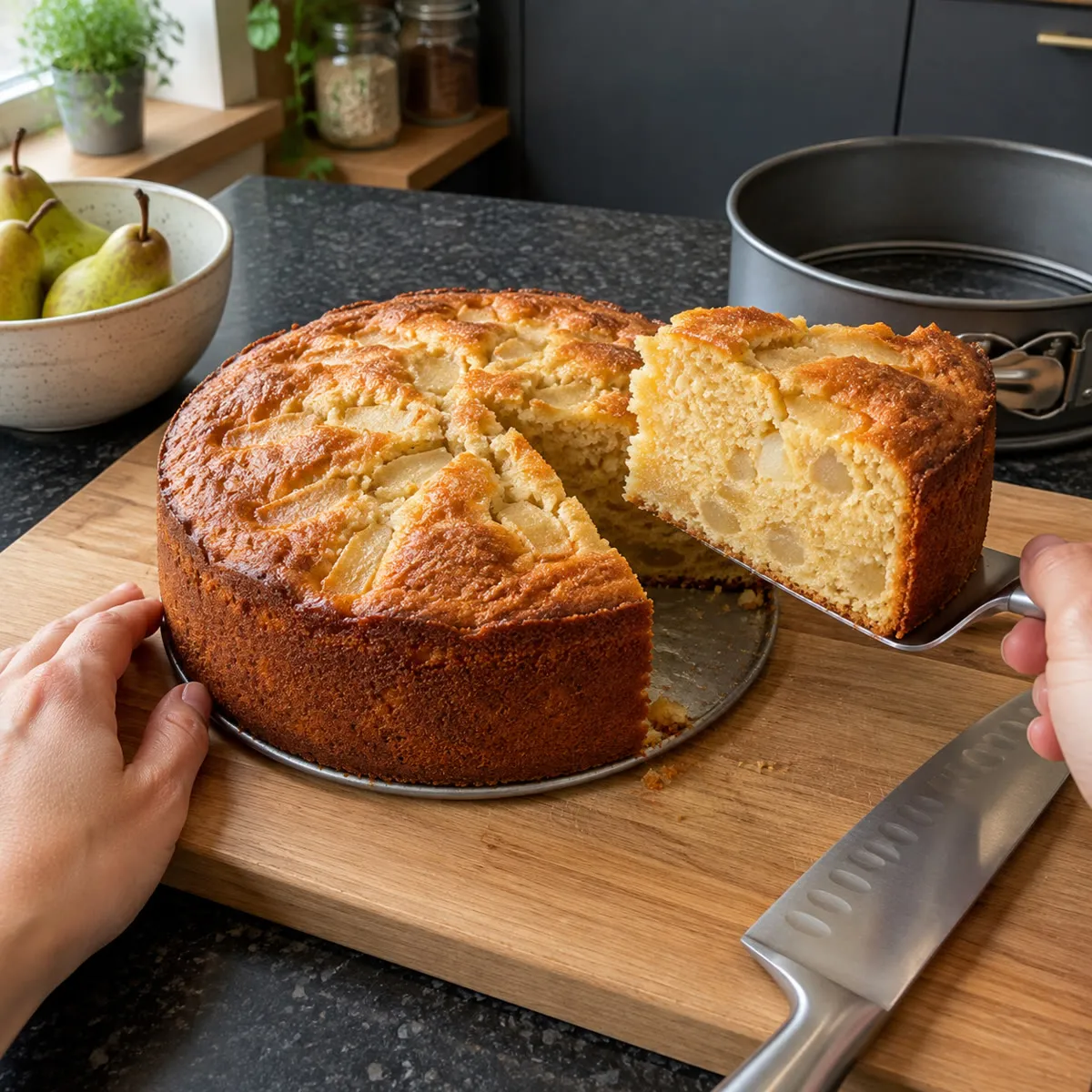
Slide the cooled cake off its base and onto a serving plate. Cut into thick wedges, lifting each piece carefully so the soft pear pockets remain intact. The cut face should show a pale golden crumb dotted with tender fruit. Place each wedge on a plate and pour the warm caramel sauce over it at the table.
Baker's notes
- Conference or Anjou pears work well here. Choose fruit that is ripe enough to smell sweet but still firm enough to cut cleanly.
- The batter contains no added milk or water. Moisture comes from the pears, eggs and melted butter.
- The caramel thickens as it stands. Warm it gently over a low heat if it needs loosening before serving.
- Allergens: contains dairy, egg and gluten. The recipe contains no nuts or alcohol, although anyone with an allergy should check individual ingredient packaging.
Keeping it Keep the cooled cake in an airtight container in the fridge for up to 3 days. Store the caramel sauce separately in a covered container in the fridge for up to 3 days, then warm it gently before serving. Bring individual cake slices towards room temperature before adding the sauce.
Questions, answered
Can I use tinned pears instead of fresh ones?
Fresh pears give a better texture in this batter. Tinned pears tend to be softer and carry extra moisture, even after draining. If using them, choose pears in juice rather than syrup, drain thoroughly and pat dry before chopping.
Can I make this pear cake a day ahead?
Yes. Bake the cake the day before, cool it completely and keep it covered in the fridge. Prepare the caramel separately and warm it before serving. The pear pieces help keep the crumb moist overnight.
Can I leave the skins on the pears?
You can, although the skins remain more noticeable after baking. Peeling the fruit gives a softer, more even texture through the sponge, particularly when using pears with thicker skins.
Can I freeze the cake?
Yes. Freeze the cooled cake without sauce, either whole or in individual wedges, wrapped well and placed in an airtight container. Keep frozen for up to 2 months and thaw overnight in the fridge. Make or warm the caramel separately when serving.
Can I use a different fruit?
Firm dessert apples are the closest alternative because they hold their shape in the oven. They give a slightly firmer bite and less of the soft, almost creamy fruit texture that ripe pears bring to this cake.
If it goes wrong
- It sank in the middleSeven causes, told apart by the shape of the crater.
- It came out raw in the centreBrown outside, wet inside, and how to rescue the one you are holding.
- The caramel seizedIt is almost always fixable. The lump re-melts.