Brown Sugar Chocolate Chip Cookies
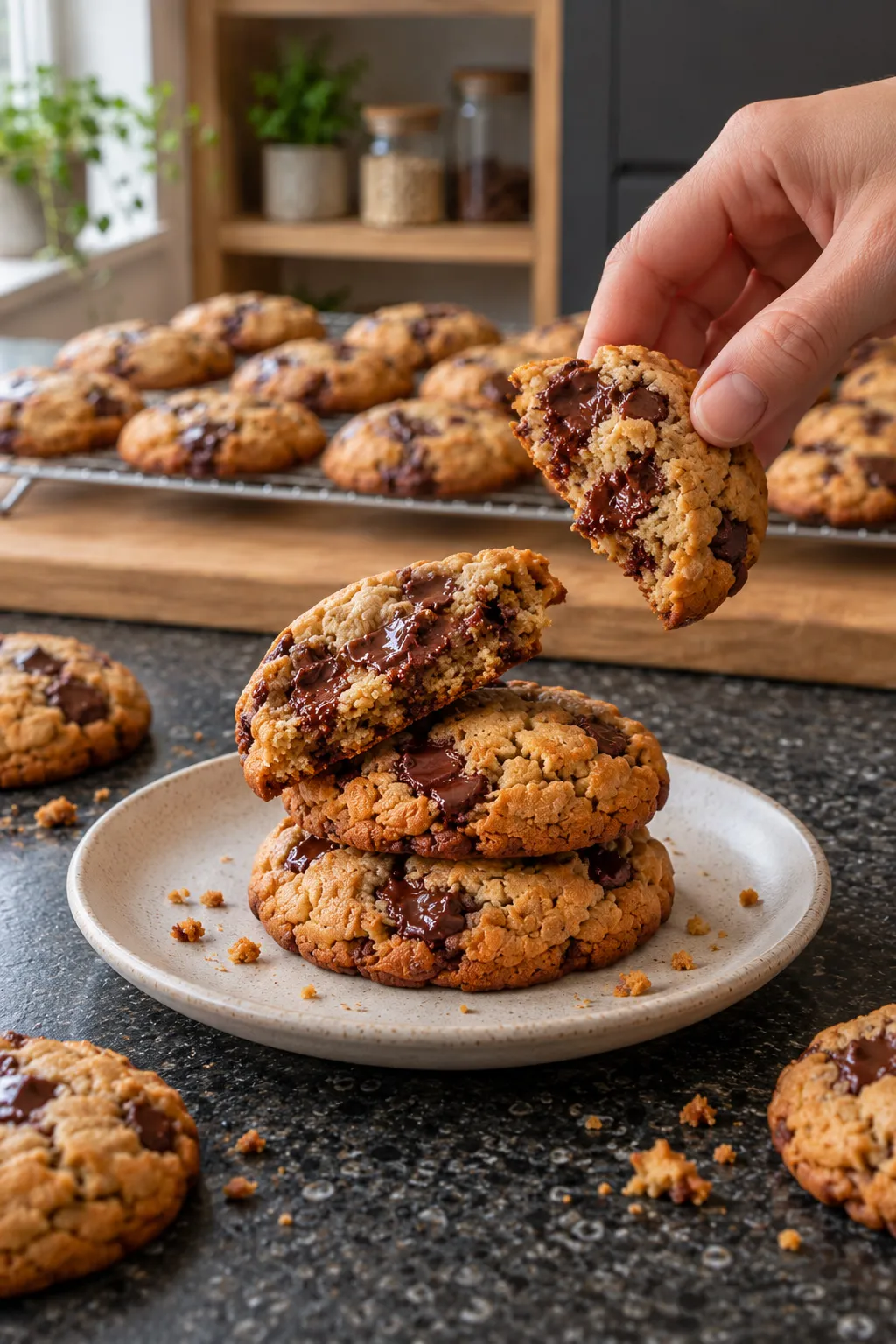
Soft brown sugar gives these thick chocolate chip cookies a chewy middle, golden edges and a gentle caramel flavour, with plenty of melted chocolate in every bite.
- Total
- 31 min
- Prep
- 20 min
- Bake
- 11 min
- Level
- Medium
- Makes
- 24
- Trays
- two lined baking trays
These brown sugar chocolate chip cookies have a darker, chewier middle than cookies made with mostly white sugar. Light soft brown sugar holds moisture in the dough and brings a mild toffee flavour that sits well with dark chocolate.
The dough is soft and a little sticky when mixed. Resist adding extra flour, as that can turn the centres dry. Take the cookies out while the middle still looks slightly underbaked.
Ingredients
Makes 24 cookies on two lined baking trays
For the cookies
You will need
- 2 large baking trays
- Baking parchment
- Large mixing bowl
- Electric hand mixer
- Flexible spatula
- Digital kitchen scales
- Wire cooling rack
Oven
180°C fan 160°C 355°F
Method
Oven 180°C · fan 160°C · 355°F
Prepare the trays
Heat the oven to 180C, 160C fan. Line two large baking trays with parchment and leave them flat, with no curled paper at the corners. Clear a space on the worktop for the dough balls so they can be weighed before baking.
Cream the butter and brown sugar
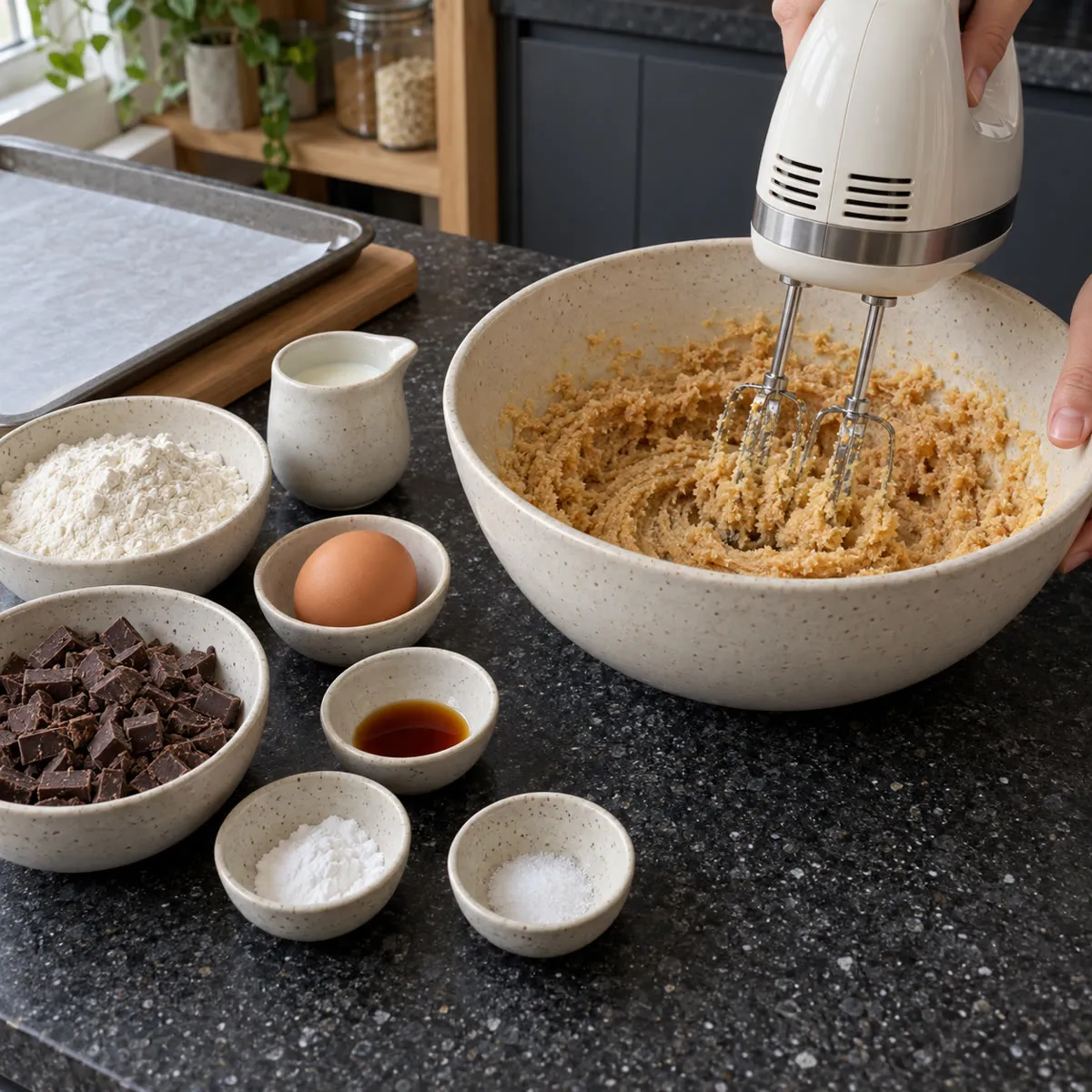
Put the 125 g softened butter and 245 g light soft brown sugar into a large bowl. Beat with an electric hand mixer for 2 to 3 minutes, scraping down the sides halfway through. The mixture should look lighter brown, thick and creamy, with fine sugar grains still visible. It should hold soft ridges when the beaters lift.
Add the egg, milk and vanilla
Beat in the egg until the mixture looks glossy and mostly smooth. Pour in the 35 ml whole milk and 10 ml vanilla extract, then mix briefly. The mixture may look slightly split or grainy around the edges, but there should be no separate pool of liquid.
Make the chocolate chip dough
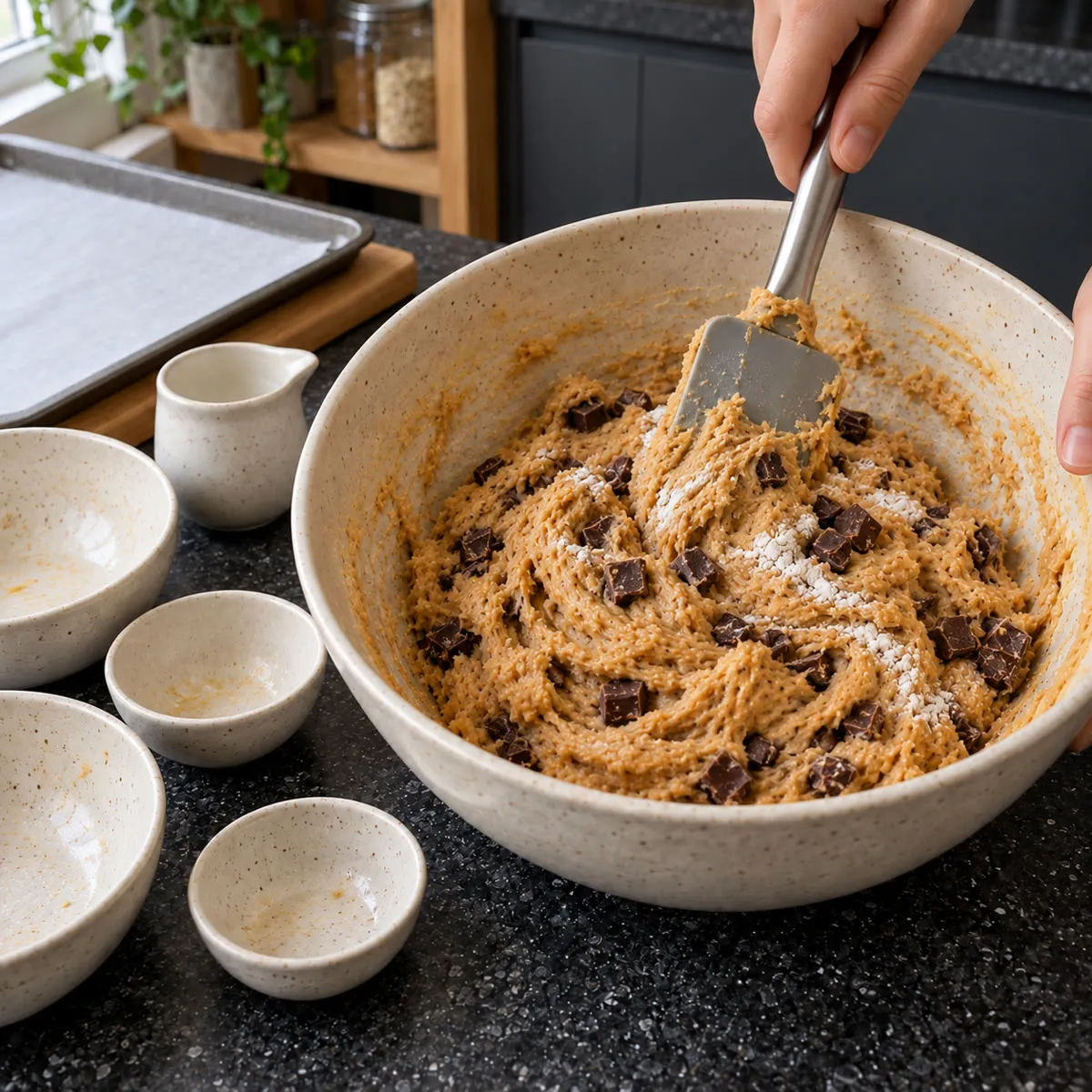
Add the 190 g plain flour, 1 tsp baking powder, 2 g bicarbonate of soda and 4 g fine salt. Fold gently with a spatula until only a few streaks of flour remain. Add the 220 g chopped dark chocolate and fold again until the flour disappears. The dough should be thick, soft and slightly tacky, with chocolate chunks distributed throughout.
Weigh and space the dough balls
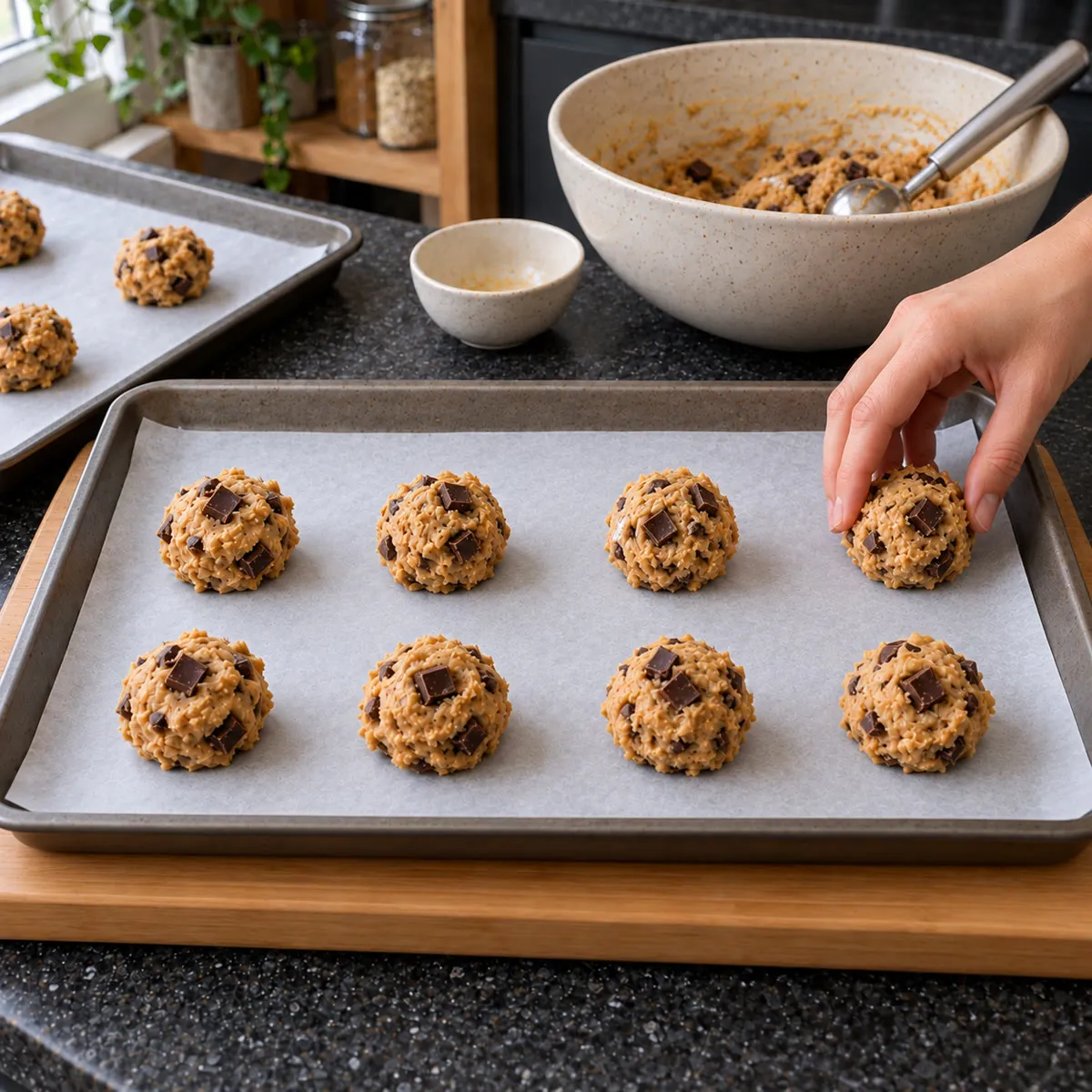
Divide the dough into 24 balls, weighing 37 g each. Roll them gently between your palms without packing the dough tightly. Place 8 balls on each lined tray, leaving at least 6 cm between them. Keep the remaining balls aside for the final batch. The balls should look rounded and slightly rough, with chocolate visible on their surfaces.
Bake one tray at a time
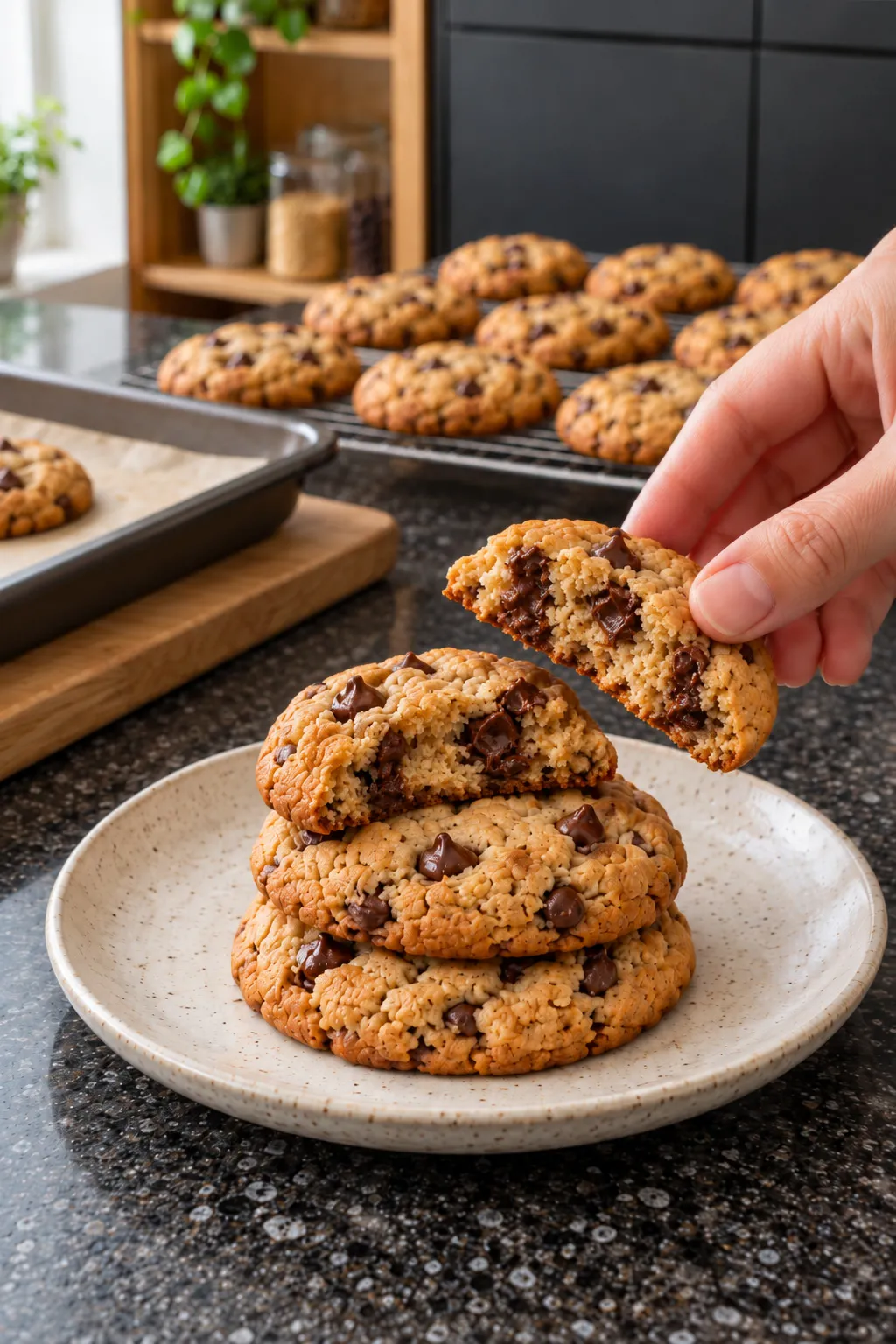
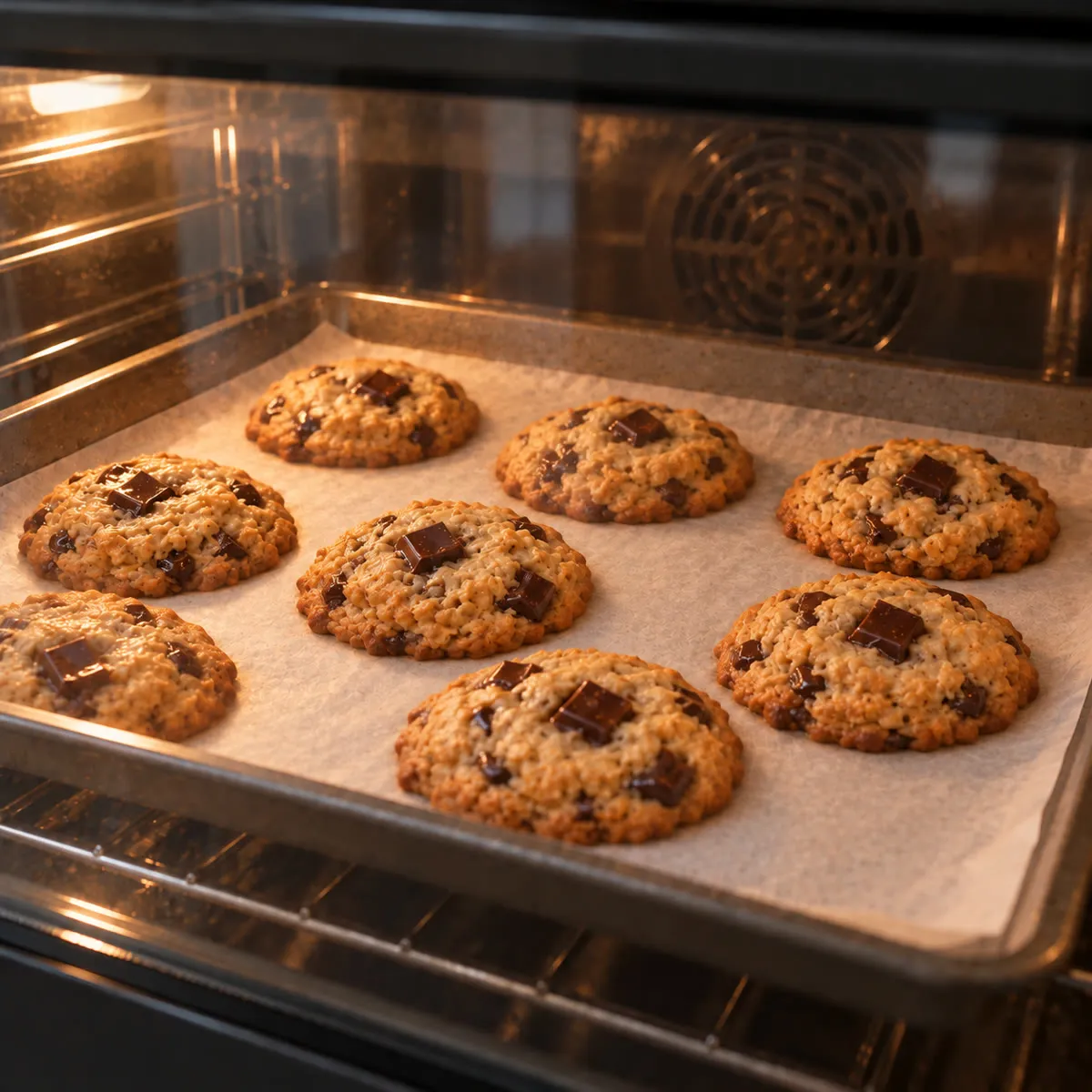
Put one tray on the middle shelf and bake for 10 to 12 minutes. Check at the earlier end of the range. The edges are set and golden and the middles still look slightly underbaked, because they firm up as they cool. The cookies should have spread into thick rounds with small cracks across the tops. Bake the remaining trays in the same way, one at a time.
Cool on the tray
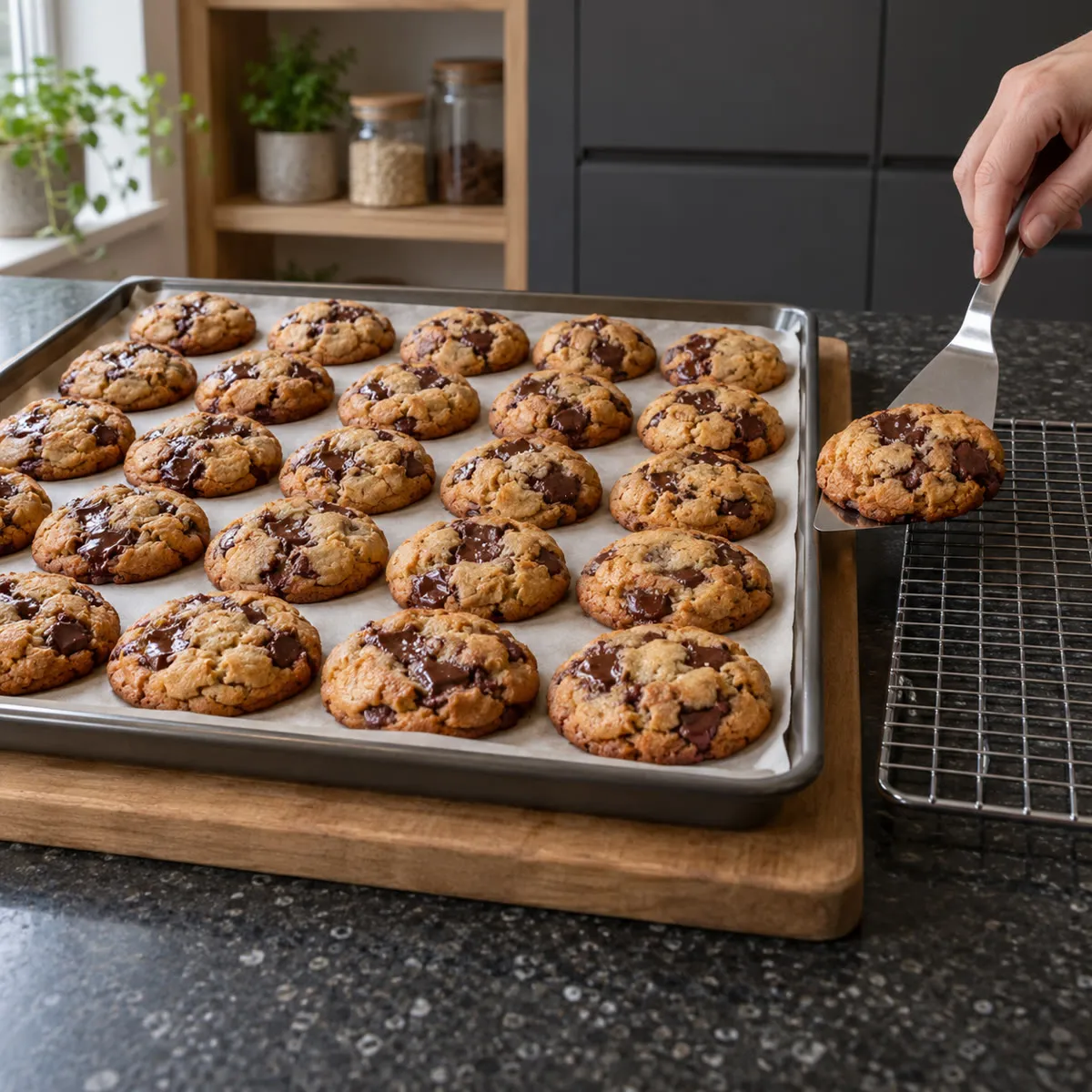
Leave the cookies for 5 minutes on the tray before moving them to a wire rack. They will be soft when they first come out, but the edges should become firm enough to lift with a spatula. Let them cool on the rack until the chocolate is no longer runny and the undersides feel firm.
Check the centre
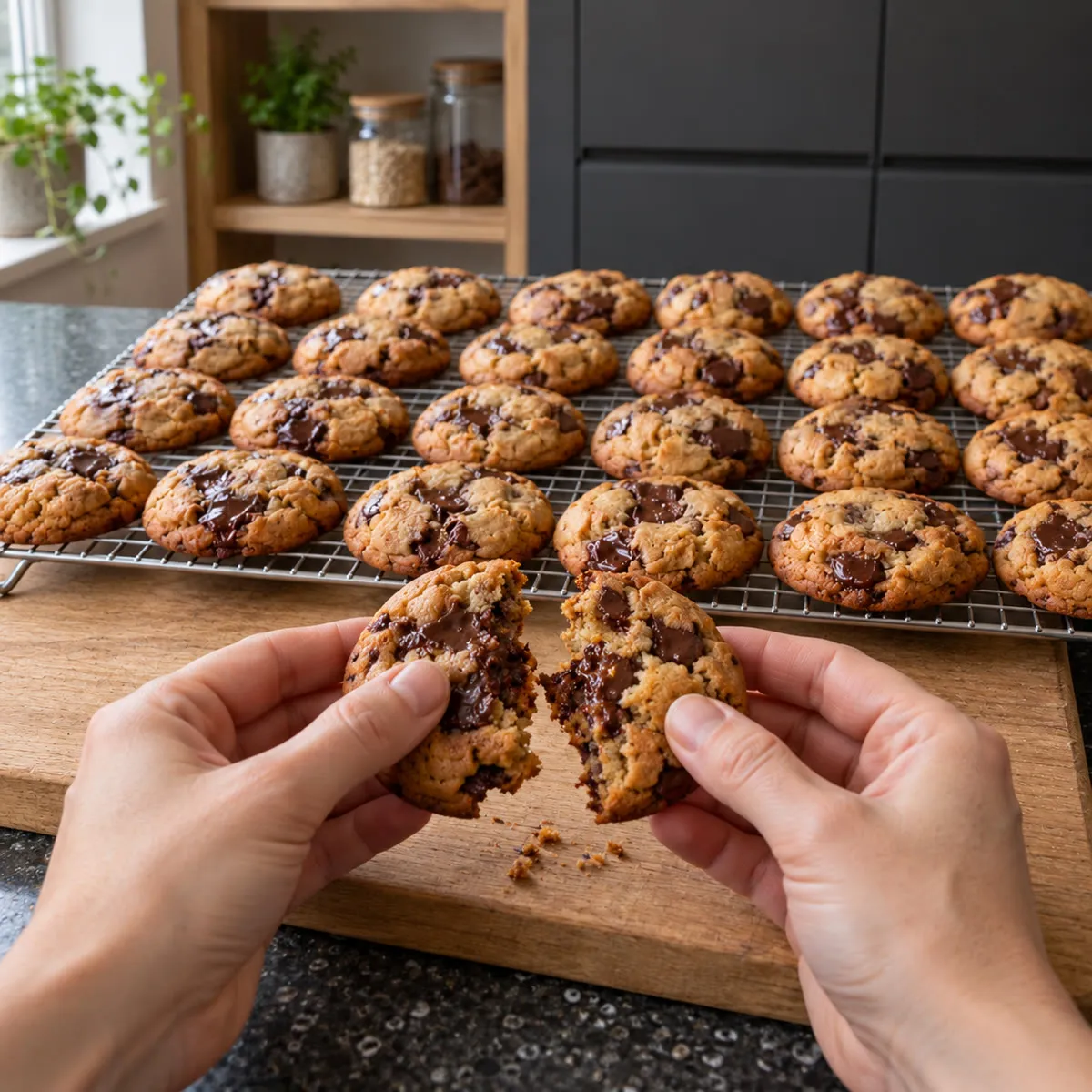
Break one cooled cookie in half. The inside should be pale golden brown, close-textured and moist, with softened chocolate running through it. The outer edge should hold its shape rather than crumble into dry crumbs. Serve the cookies once the chocolate has settled to your liking.
Baker's notes
- Light soft brown sugar is important here. Dark muscovado has a much stronger treacle flavour and can make the dough noticeably stickier.
- Use chopped chocolate from a bar rather than very fine chocolate shavings. Distinct chunks leave visible pockets of chocolate in the baked cookies.
- For a thicker cookie, chill the covered dough until it feels firmer before portioning. Cold dough spreads more slowly, so check the centre before taking the tray out.
- Allergens: contains dairy, egg, gluten and chocolate that may contain traces of nuts. Check the chocolate packaging for nut warnings. The recipe contains no added alcohol, although some vanilla extracts contain alcohol.
Keeping it Keep the cooled cookies in an airtight container at room temperature for up to 4 days. Freeze the unbaked dough balls in a sealed container for up to 3 months, separating layers with parchment. Bake from frozen and allow a little extra time, checking for golden edges and a soft centre.
Questions, answered
Can I use dark brown sugar instead of light brown sugar?
Yes, but the cookies will taste more strongly of treacle and may be darker and softer. Light soft brown sugar gives a gentler caramel flavour that leaves the chocolate more noticeable.
Why are my brown sugar cookies spreading too much?
Butter that is almost melted can make the dough spread before the edges set. The dough should feel thick and hold a rounded shape when portioned. If it is very soft, refrigerate it until the balls hold their shape.
Can I replace the dark chocolate with milk chocolate?
Yes, use the same weight of milk chocolate. The cookies will taste sweeter, as the dough already contains plenty of brown sugar. Choose a chocolate bar that can be chopped into clear chunks.
Can I make the dough the day before baking?
Yes. Cover and refrigerate the prepared dough overnight. Let it soften enough to portion without cracking, or weigh and shape the balls before refrigerating them. Cold dough may need slightly longer in the oven.
Why do my cookies become firm the next day?
Cookies lose moisture as they sit, particularly if they are stored uncovered. Keep them in an airtight container once completely cool. If they were already dry on the first day, they were probably baked too long.