Troubleshooting · 6 min read
Why is my cake raw in the middle?
Brown outside, wet batter in the centre. The oven ran hot for the depth of the cake, or it came out too soon. Here is how to tell which, and how to rescue the one on your worktop.
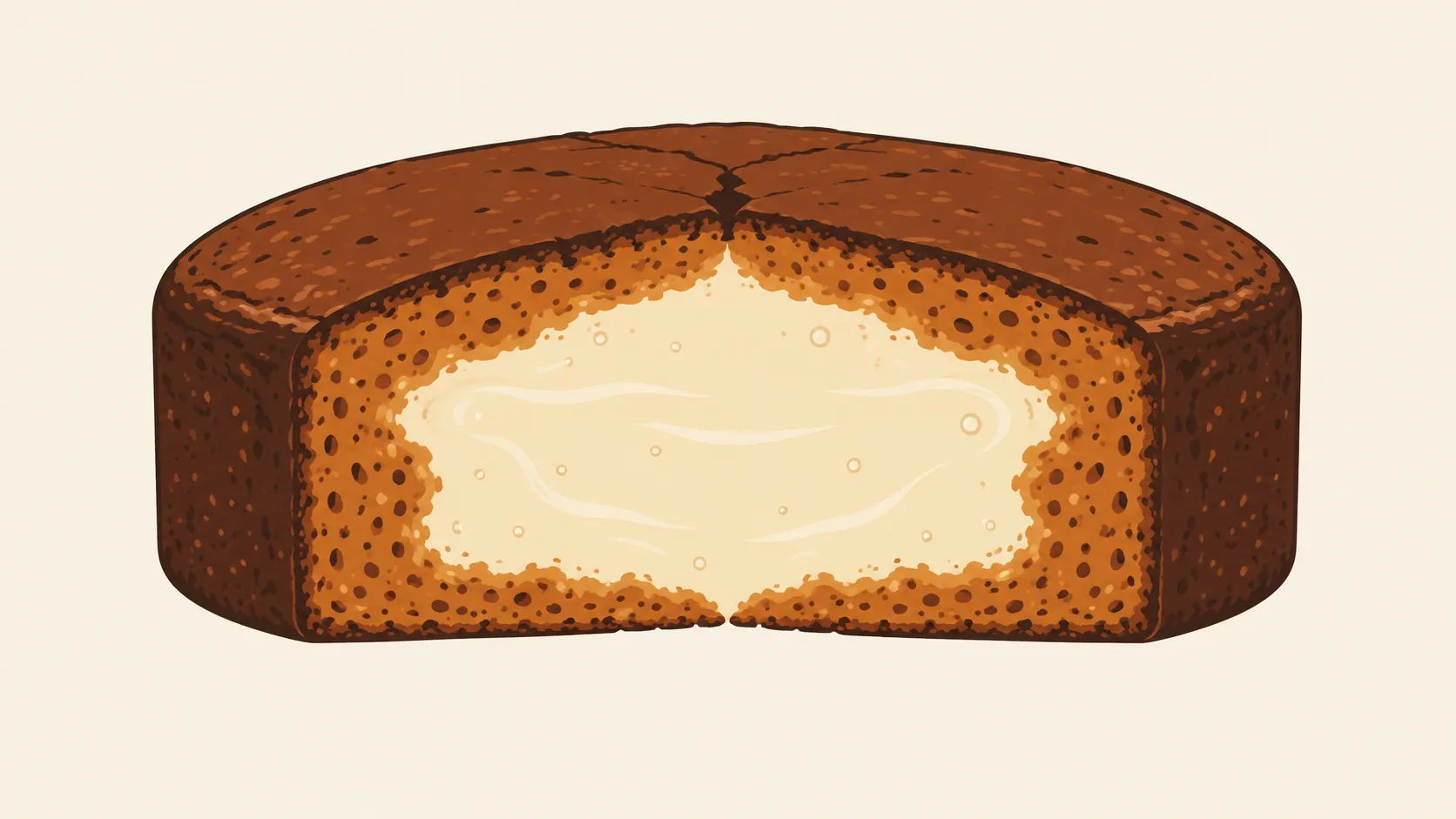
A cake that is brown on the outside and raw in the middle was baked too hot for its depth, or came out too early. Heat moves into a cake from the outside in, so the edges are always ahead of the centre, and the gap widens when the oven runs hotter than the dial, when the tin is smaller and deeper than the recipe meant, or when the skewer went in near the edge, where the cake sets first.
This is not the same fault as a cake that sinks. A sunken cake set and then fell; a raw one never set. The fixes are different, and so is the rescue.
Which one is yours
| What you see | What happened |
|---|---|
| Dark top and sides, wet centre, normal height | The oven is hotter than the dial says |
| Pale all over, wet centre, and it took longer than the recipe said | The oven is too cool, or two tins shared it, or the door kept opening |
| Good colour, and only a small patch in the very middle is wet | It came out five to ten minutes early. Nothing is wrong with your oven |
| A raw patch off to one side | A hot spot, or the tin was against a wall or an element |
| Wet under the fruit, cooked everywhere else | The fruit, not the bake: see why cakes sink |
1. The oven runs hotter than the dial
Handle the Heat puts most home ovens 15 to 25°F off the dial, about 10 to 15°C. At 190°C when you asked for 175°C, the crust sets and browns in the first quarter of an hour and then shields the middle from the heat while it carries on darkening itself. Colour is a poor test of doneness for this reason: a cake that is done and a cake that is merely brown look the same from above.
An oven thermometer settles it. If it reads high, turn the dial down until the thermometer shows the recipe’s figure. Every recipe here gives two temperatures, such as 175°C and 155°C fan, so do not take 20°C off a fan figure that has already had it taken off. Dark metal tins brown the edges hardest, King Arthur Baking notes, and a tall-sided tin like a springform shields the top a little; a light-coloured tin bakes most evenly.
2. The tin is smaller or deeper than the recipe meant
Depth matters more than width. King Arthur’s rule for a smaller tin than the recipe calls for is 10 to 15 minutes longer, with more doming and more browning, and a real risk of a dry butter cake by the time the centre is done. A loaf tin is the usual offender: narrow and deep, so the same batter that bakes through in 55 minutes as a 20 cm round can want 65 or more as a loaf.
When the cake is deeper than the recipe meant, drop the oven by 10°C, add 10 to 15 minutes, and lay a loose sheet of foil over the top the moment the colour is there before the centre is. The tin conversion guide has the arithmetic for going the other way.
3. The test was in the wrong place, or too early
The edges set first, so a skewer pushed in two centimetres from the side comes out clean on a cake whose centre is still liquid. Test in the middle, all the way to the base of the tin, and then a second spot a few centimetres away. Two clean readings mean done; on a fudgy cake, such as the chocolate fudge cake, two readings with a few damp crumbs clinging on. One reading means nothing, and a skewer through a pocket of fruit or melted chocolate comes out wet on a cake that is perfectly baked.
Back it up with a fingertip. Press the centre: a finished cake springs back, and one that holds the dent needs at least five more minutes, in King Arthur’s words. A finished cake has also pulled 3 to 6 mm away from the sides of the tin. If you own a probe thermometer, the centre of a baked cake reads 96 to 99°C, though King Arthur cautions that the figure varies by recipe, so treat it as one test among the others rather than the only one.
4. Two tins, or the door
Two tins side by side shield each other and block the airflow a fan oven relies on, and every time the door opens the oven loses 15°C or more that it then has to win back. Bake one tin at a time in the middle of the middle shelf, use the oven light instead of the door, and if you must bake two, put them on the same shelf with a gap between them and add ten minutes.
How to rescue a cake that is raw in the middle
Still in the tin, straight out of the oven, is the good case: put it back in, turn the oven down to 160°C (150°C fan), cover the top loosely with foil to stop it browning further, and give it 10 to 15 minutes before testing again. This works, and the only cost is a slightly drier edge.
Cooled, with a small wet patch in the centre: reheating the whole cake now dries the cooked part without saving the middle, because the set crumb will not cook evenly a second time. Cut the wet centre out cleanly and serve the ring in wedges, or fill the hole with cream and fruit. Do not eat the wet part: raw batter is raw egg and raw flour.
Cooled, with most of the inside wet: stop. The cooked outer ring can go into a trifle or be crumbled into cake truffles with a little cream cheese. The rest goes in the bin, and the next section makes sure it does not happen again.
The microwave never works. It heats the wet centre so fast that the water turns to steam and the crumb goes tough and rubbery in under a minute.
Next time
- Buy an oven thermometer and set the dial by it, once.
- Bake one tin at a time, centre of the middle shelf, clear of the walls.
- Test in the centre, twice, to the base of the tin, and press the top as well.
- If the cake is deeper than the recipe meant, drop 10°C and add 10 to 15 minutes.
And if the top is browning fast while the middle is nowhere near ready, lay a loose sheet of foil over it at the halfway mark. It costs nothing, it cannot hurt the cake, and every recipe here that browns quickly says to do it.
Where this comes from
- King Arthur Baking, How to tell when cake is done: test the centre because the edges set first, the skewer, the spring-back, the 1/8 to 1/4 inch gap at the sides, and the caution about internal temperature.
- King Arthur Baking, Why the size of your baking pan matters so much: 10 to 15 minutes longer in a smaller tin, dark tins and tall tins.
- Handle the Heat, How to prevent cakes and cupcakes from sinking: ovens 15 to 25°F off the dial, 205 to 210°F at the centre, the oven light.
- The recipes on this site, each of which names the damp-crumb test and the foil at the step where it applies.