Lemon Poppy Seed Cake with Lemon Curd Sauce
A tall, buttery lemon poppy seed cake with a close tender crumb, baked slowly in one tin and served with warm, pourable lemon curd sauce.
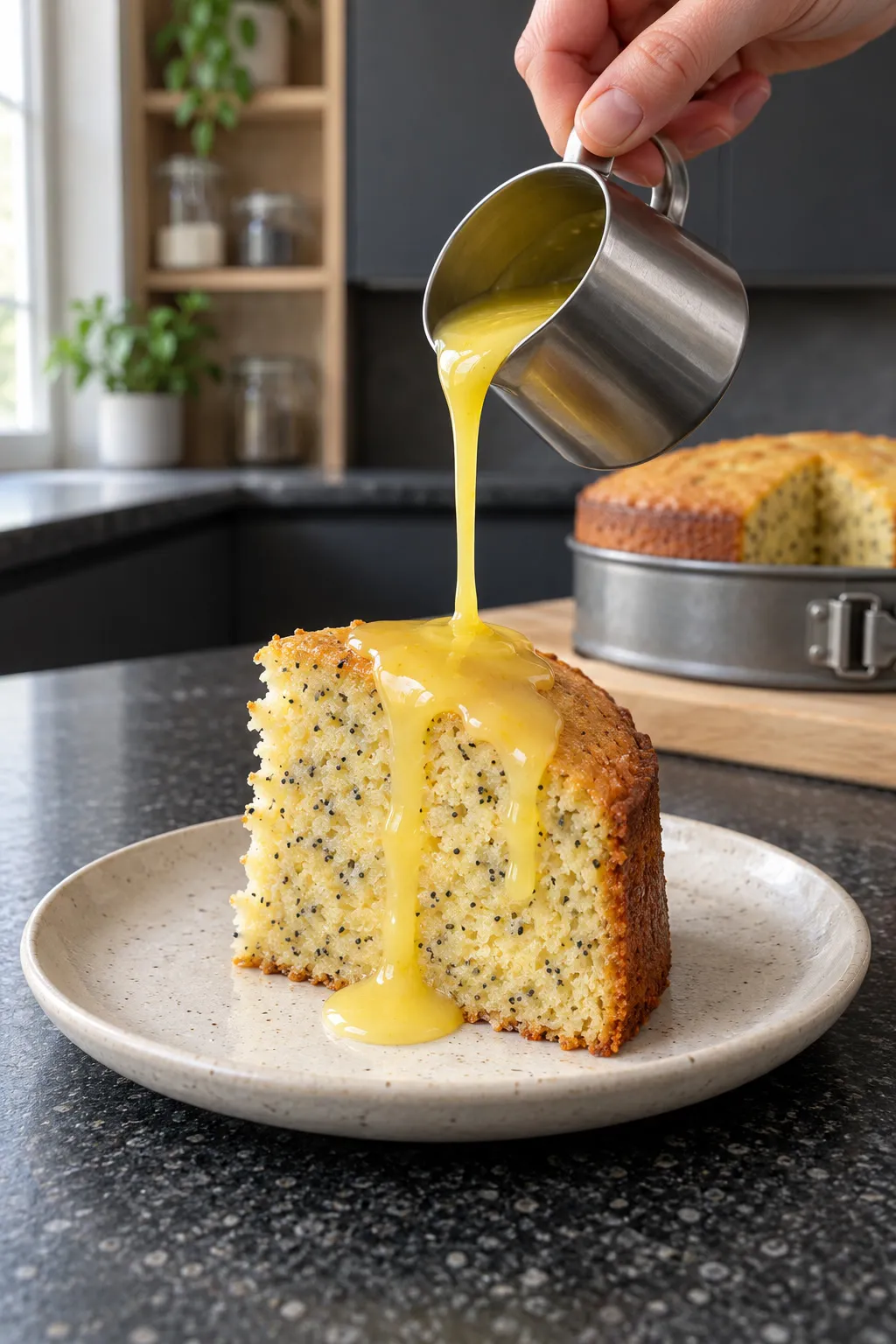
- Total
- 1 hr 25 min
- Prep
- 30 min
- Bake
- 55 min
- Level
- Medium
- Serves
- 10
- Tin
- 20 cm springform
This tall lemon poppy seed cake uses a butter and caster sugar base with plain flour, eggs and a small amount of liquid to create a close, tender crumb. The batter is suited to a 20 cm springform tin, where a steady bake allows the centre to set while the outside colours evenly.
Lemon zest brings the main citrus aroma, while poppy seeds add fine texture throughout the crumb. While the cake cools, the lemon curd sauce is cooked gently until glossy, then served separately and poured over each slice at the table.
Ingredients
For one 20 cm springform, serves 10
For the cake
For the lemon curd sauce
You will need
- 20 cm round springform tin
- baking paper
- large mixing bowl
- medium mixing bowl
- electric hand mixer
- silicone spatula
- small saucepan
- balloon whisk
- wire rack
- skewer
Oven
175°C fan 155°C 345°F
Method
Oven 175°C · fan 155°C · 345°F
Prepare the tin and cream the butter
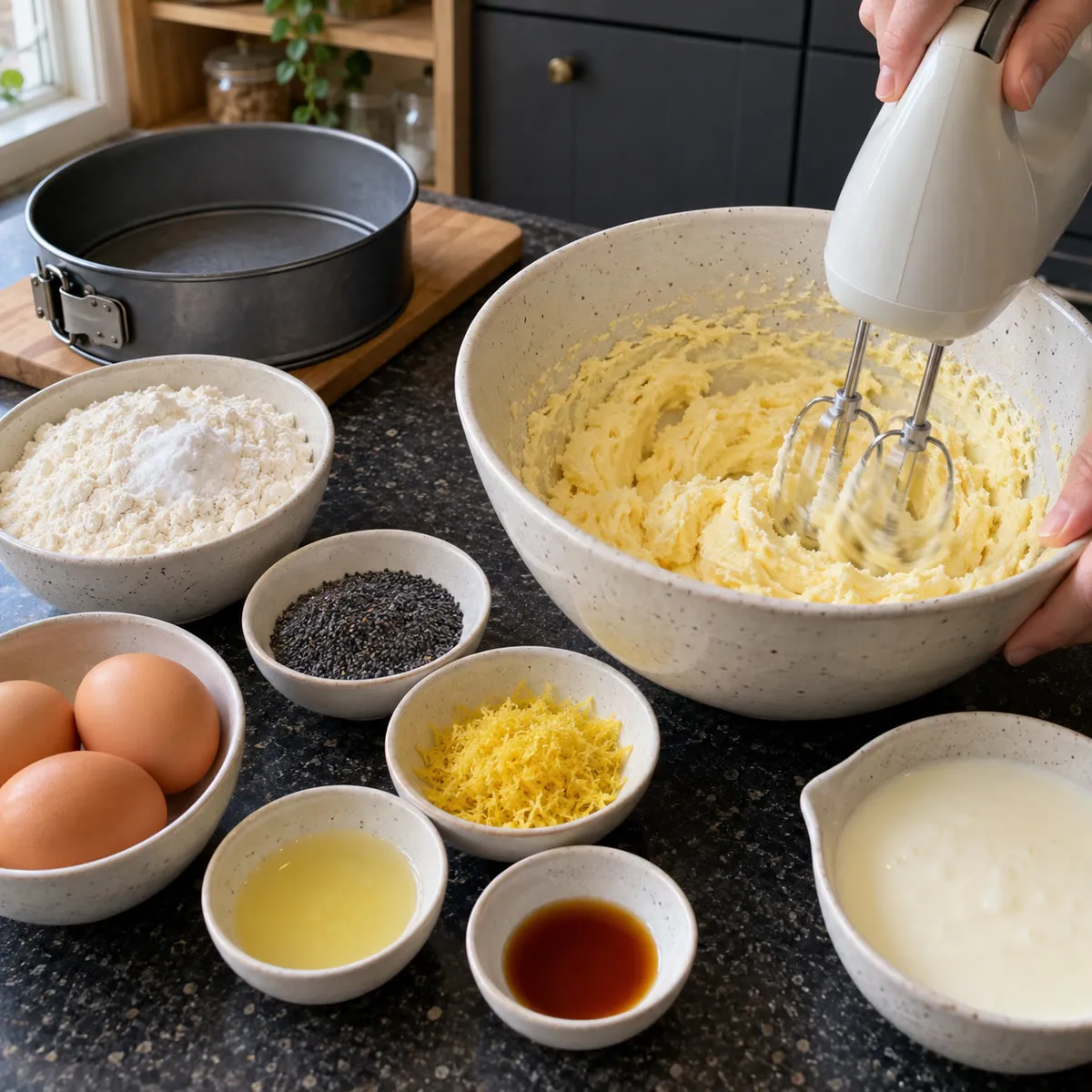
Heat the oven to 175C, 155C fan. Grease the springform tin and line the base and sides with baking paper so the paper sits flat against the metal. Beat the butter and caster sugar with the electric hand mixer until the mixture looks noticeably paler, feels light rather than greasy and forms soft ridges around the beaters. Scrape the bowl well so there are no dense buttery streaks hiding at the bottom or sides.
Finish the batter
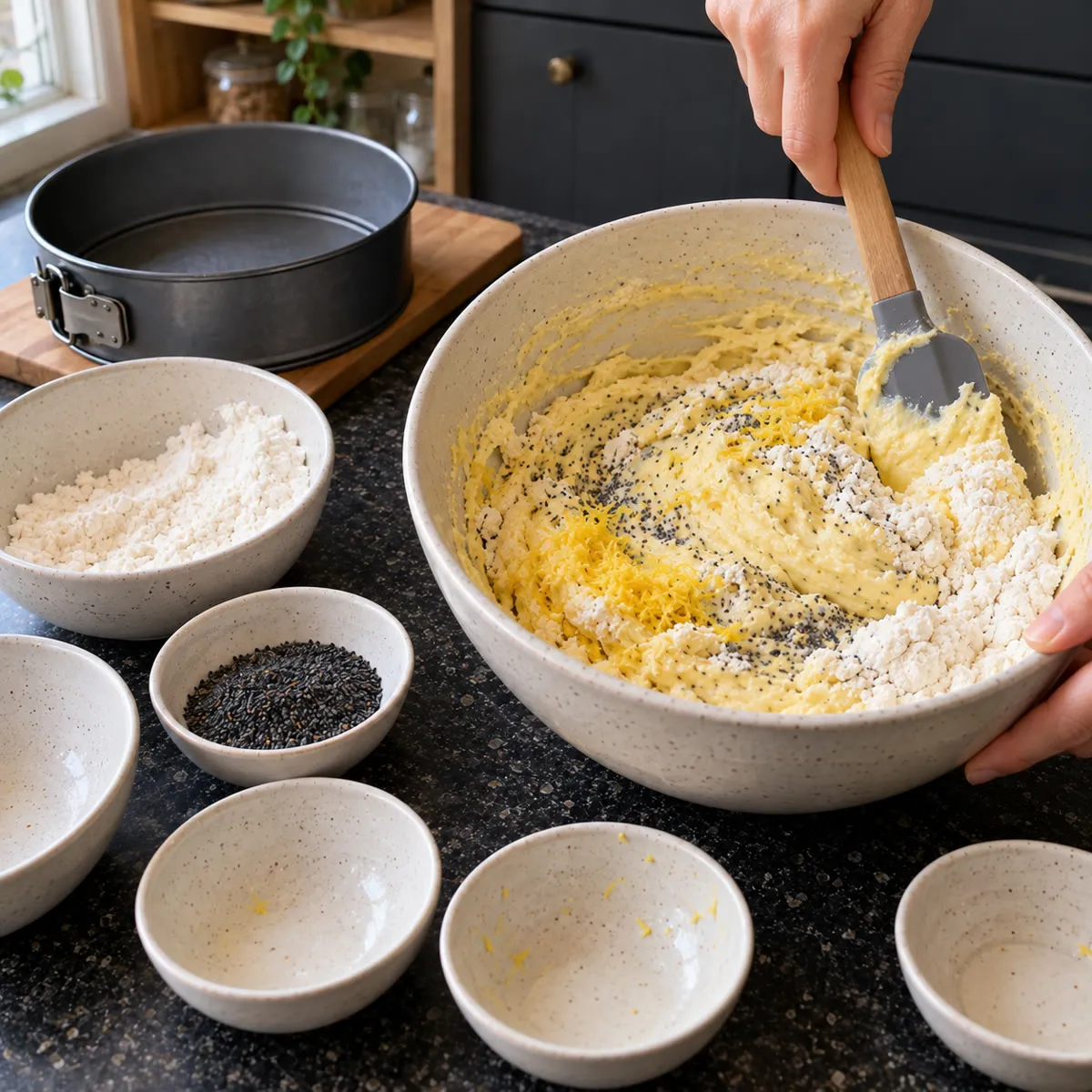
Beat in the eggs one at a time, mixing until each disappears before adding the next. Add the lemon zest and vanilla, and beat until the mixture smells bright and citrusy and looks smooth. Stir the buttermilk and lemon juice together. Fold in the flour, baking powder and salt alternately with the buttermilk mixture, then fold through the poppy seeds. The batter should look pale, thick and evenly speckled, with no visible flour pockets or separated liquid.
Fill the springform tin
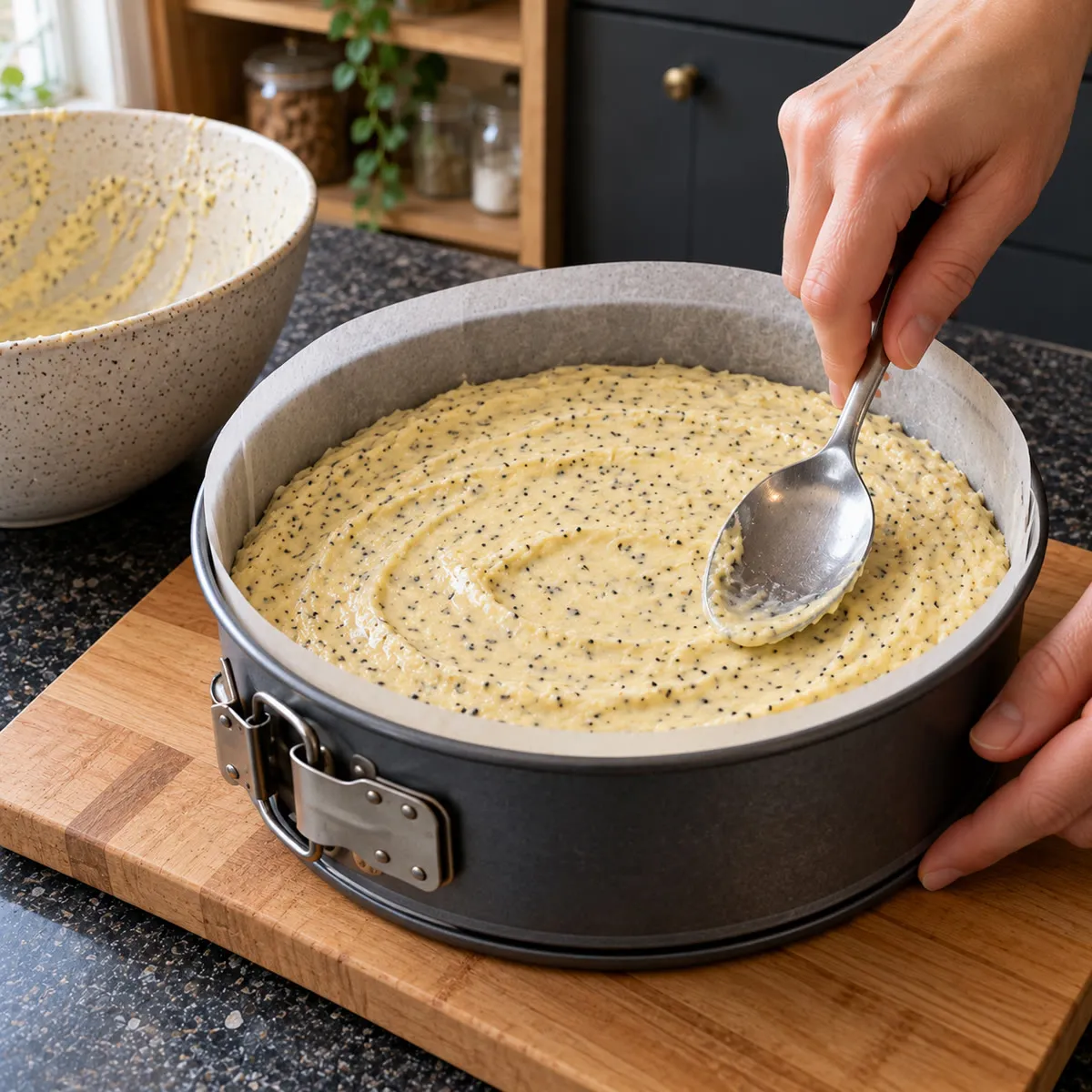
Spoon the batter into the lined tin and spread it right to the sides with the spatula. Level the surface without pressing out the air, then run the spatula lightly across the top so there are no deep hollows or high peaks. The batter should sit thickly in the tin, hold a soft level surface and show poppy seeds evenly from edge to edge. Wipe any smears from the exposed rim so they do not scorch during baking.
Bake until the centre is set
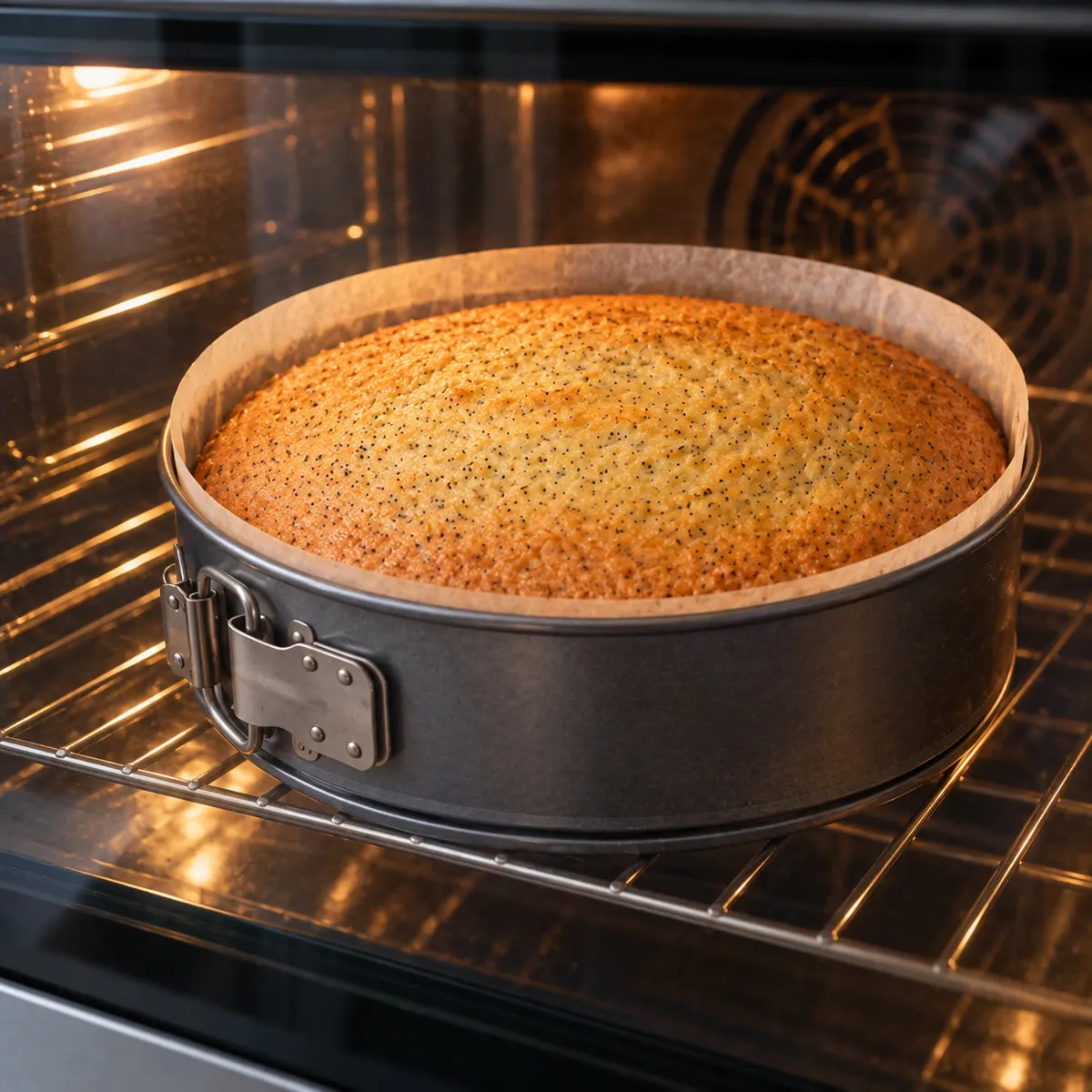
Bake for 50 to 60 minutes, until the cake is an even golden colour and smells buttery and strongly of lemon. If the top is colouring faster than the centre is setting, lay a loose sheet of foil over the tin. The cake is ready when a skewer pushed into the middle comes out with a few damp crumbs, and the top springs back. The centre should look level and set rather than wet or sunken.
Cool and release the cake
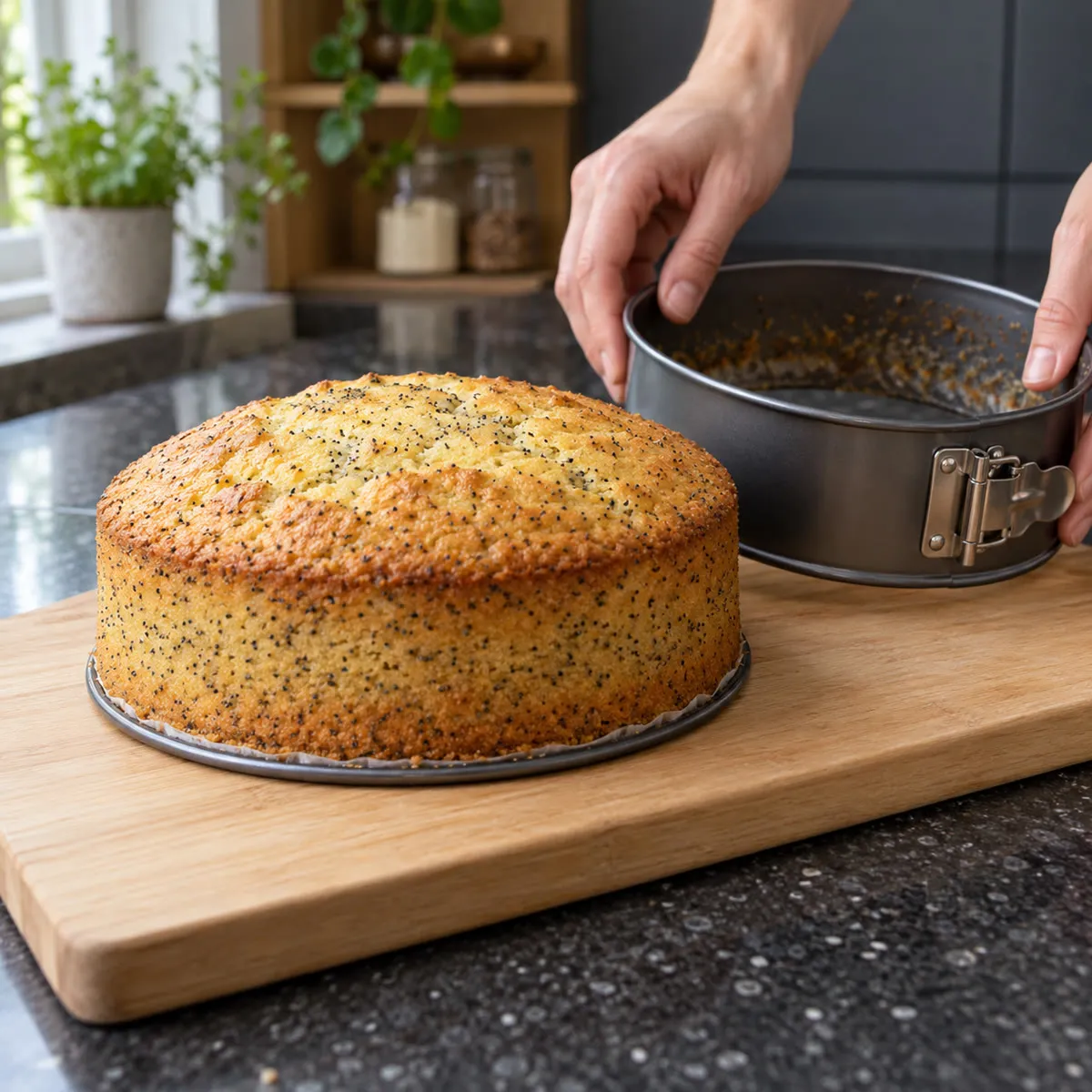
Leave the cake for 20 minutes in the tin so the crumb can settle while the edges become firm enough to handle. Run a thin knife around any points that have caught, then open the springform ring and lift it away carefully. Transfer the cake, still on its base paper, to the wire rack. The outside should be golden with slightly darker edges, and the top should feel resilient rather than fragile when touched very lightly.
Cook the lemon curd sauce
While the cake cools, whisk the eggs, caster sugar, lemon juice and lemon zest together in the saucepan until the mixture is smooth and even. Set it over low heat and whisk steadily, scraping into the corners, until it thickens enough to coat the whisk and looks glossy. Remove from the heat, whisk in the butter until fully melted, then stir in the double cream. The sauce should be lemon yellow, smooth and pourable, with a clean citrus smell and no cooked egg aroma.
Cut a clean slice
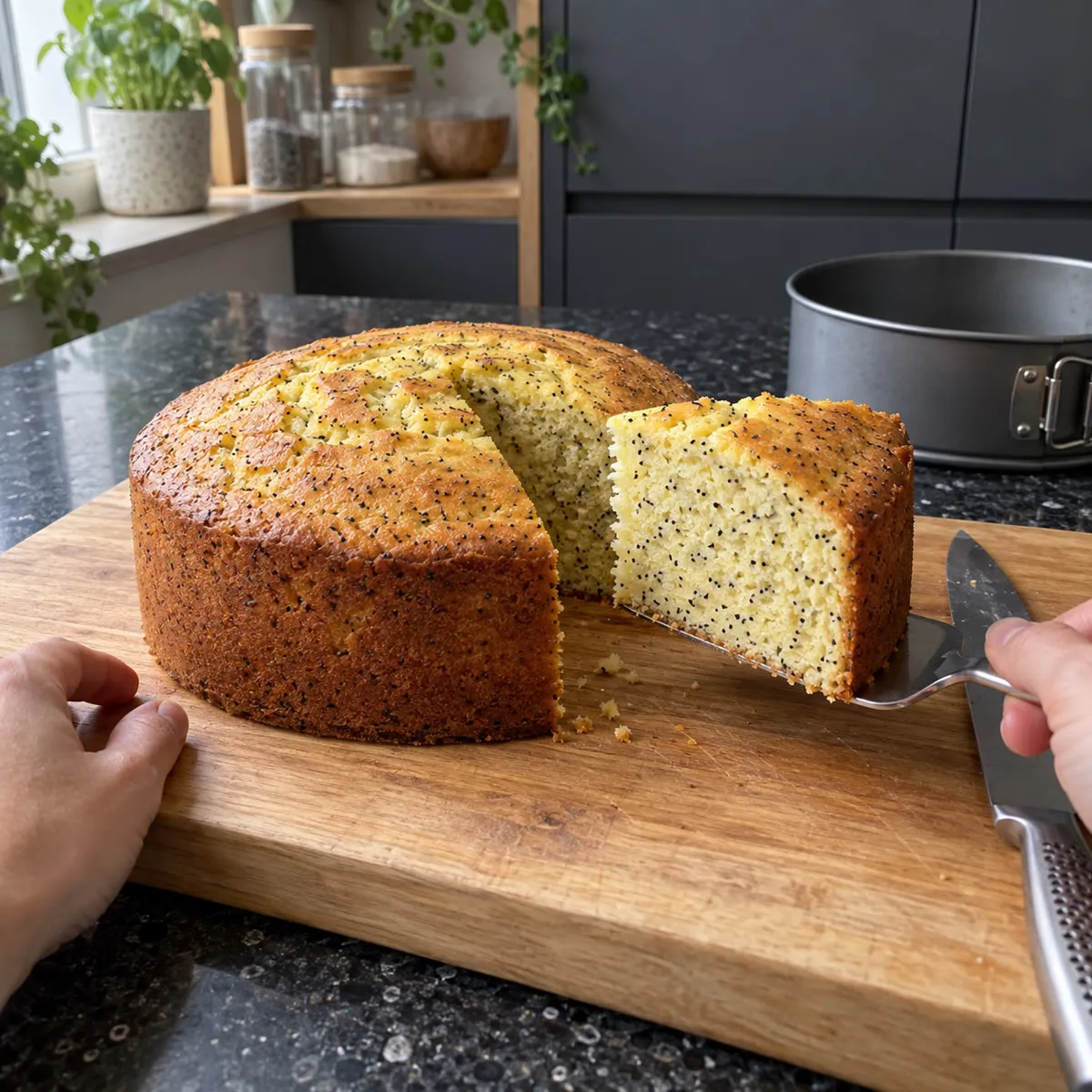
Let the cake cool until the crumb feels settled and the base is no longer warm enough to soften when moved. Peel away the paper, place the cake on a serving plate and cut with a sharp serrated knife using a gentle sawing motion. Lift out one wedge without squeezing the sides. The crumb should be pale yellow, fine and moist, with poppy seeds spread evenly through it and no gummy line near the base.
Serve with the sauce
Warm the lemon curd sauce gently if it has thickened during cooling, stirring until it flows in a steady ribbon from the spoon. Bring the cake and sauce to the table separately. Set each slice on its plate, then pour the sauce over the cut face and let a little run down the side. The contrast should be clear: a tender, close crumb against a glossy sauce that clings lightly without soaking straight through the slice.
Baker's notes
- Use room temperature butter, eggs and buttermilk for the batter. Ingredients at a similar temperature combine more smoothly, which helps the mixture stay emulsified instead of looking curdled before the flour goes in.
- Finely grate only the yellow surface of the lemons. The white pith underneath is bitter, so stop as soon as the coloured zest has been removed and juice the fruit afterwards.
- Fresh poppy seeds should smell mild and slightly nutty. If they smell stale, dusty or bitter, replace them, because old seeds can give the whole crumb an unpleasant aftertaste.
- A springform tin can leak if the base is not seated cleanly. Lock the ring firmly around the base before lining, and place the tin on a baking tray if yours has a history of seepage.
- Allergens: contains dairy, egg and gluten. There are no nuts or alcohol in this recipe, but check every packaged ingredient if you are cooking for someone with an allergy.
Keeping it Keep the cooled cake covered at room temperature for up to two days, or refrigerate it for longer storage and bring slices back towards room temperature before serving. Keep the lemon curd sauce in a covered container in the fridge. Reheat it very gently, stirring often, until loose and pourable. Store the cake and sauce separately so the crumb does not become wet during storage.
Questions, answered
Why is my lemon poppy seed cake dense?
A dense crumb usually comes from one of three things: the butter and sugar were not creamed enough, the eggs were added too quickly and the mixture split, or the flour was mixed too vigorously. Cream until the mixture is clearly lighter, add each egg gradually, and fold the flour only until the batter is even. Also check that the baking powder is fresh, because weak raising power is more noticeable in a tall cake.
Can I make lemon poppy seed cake ahead of time?
Yes. The cake is well suited to making ahead because the butter crumb stays moist when kept covered. Bake and cool it fully, then store it unsauced. Make the lemon curd sauce separately and chill it. Before serving, let the cake lose its fridge chill if needed and warm the sauce gently until it is fluid again. Keeping the two components apart gives cleaner slices and prevents the crumb becoming damp.
Can I use self-raising flour instead of plain flour?
Self-raising flour can work, but it already contains raising agents, so using it with the full baking powder from this recipe can give too much lift followed by sinking. For the most repeatable result, use the plain flour and baking powder listed. If self-raising flour is your only option, use a trusted conversion for your brand rather than adding both raising systems at full strength.
Why did the middle of my cake sink?
The centre can sink if the cake comes out before its structure has set, if the oven door is opened too early, or if the batter contains excess raising agent. With a tall cake, colour on top is not enough. Check the middle with the skewer test and the spring test before removing it. Once baked, leave it in the tin for the full resting period so the crumb can stabilise before release.
Can lemon curd sauce be made in advance?
Yes. Make the sauce, cool it and refrigerate it in a covered container. It will become thicker when cold because of the butter. Warm it over very low heat, stirring constantly, until it returns to a glossy pouring consistency. Avoid boiling it during reheating, because strong heat can tighten the egg proteins and make the sauce grainy. Pour it over each slice only when you are ready to serve.
If it goes wrong
- It sank in the middleSeven causes, told apart by the shape of the crater.
- It came out raw in the centreBrown outside, wet inside, and how to rescue the one you are holding.
- The caramel seizedIt is almost always fixable. The lump re-melts.