Chocolate Orange Cake with Chocolate Orange Sauce
A tall chocolate orange cake with a soft cocoa crumb, bright orange zest and a glossy chocolate orange sauce to spoon over each slice.
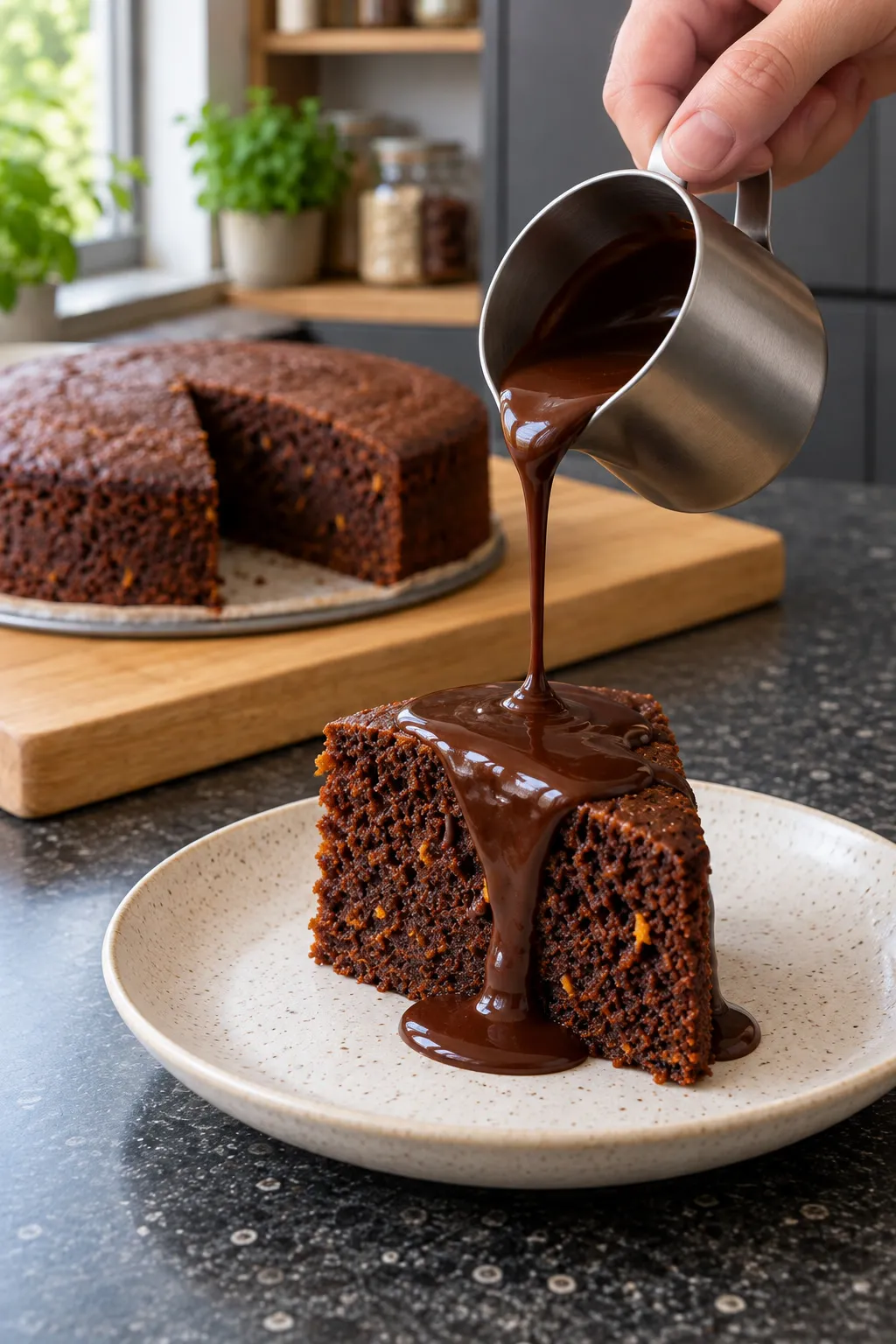
- Total
- 1 hr 20 min
- Prep
- 25 min
- Bake
- 55 min
- Level
- Medium
- Serves
- 10
- Tin
- 20 cm springform
This chocolate orange cake gets its soft crumb from sunflower oil, while cocoa and fresh orange zest keep both flavours clear. The batter is fairly fluid before baking, which is what you want.
The main thing to watch is the centre. One deep cake needs a slower bake than two sandwich layers, so leave it in until the middle has set rather than judging by the firm outer edge.
Ingredients
For one 20 cm springform, serves 10
For the cake
For the chocolate orange sauce
You will need
- 20 cm round springform tin
- baking paper
- large mixing bowl
- balloon whisk
- fine sieve
- silicone spatula
- wire rack
- small saucepan
- heatproof bowl
- skewer
Oven
175°C fan 155°C 345°F
Method
Oven 175°C · fan 155°C · 345°F
Prepare the tin
Heat the oven to 175C, 155C fan. Line the base and sides of the springform tin with baking paper. The paper should sit flat against the base and the sides should feel dry and clean before the batter goes in.
Whisk the wet ingredients
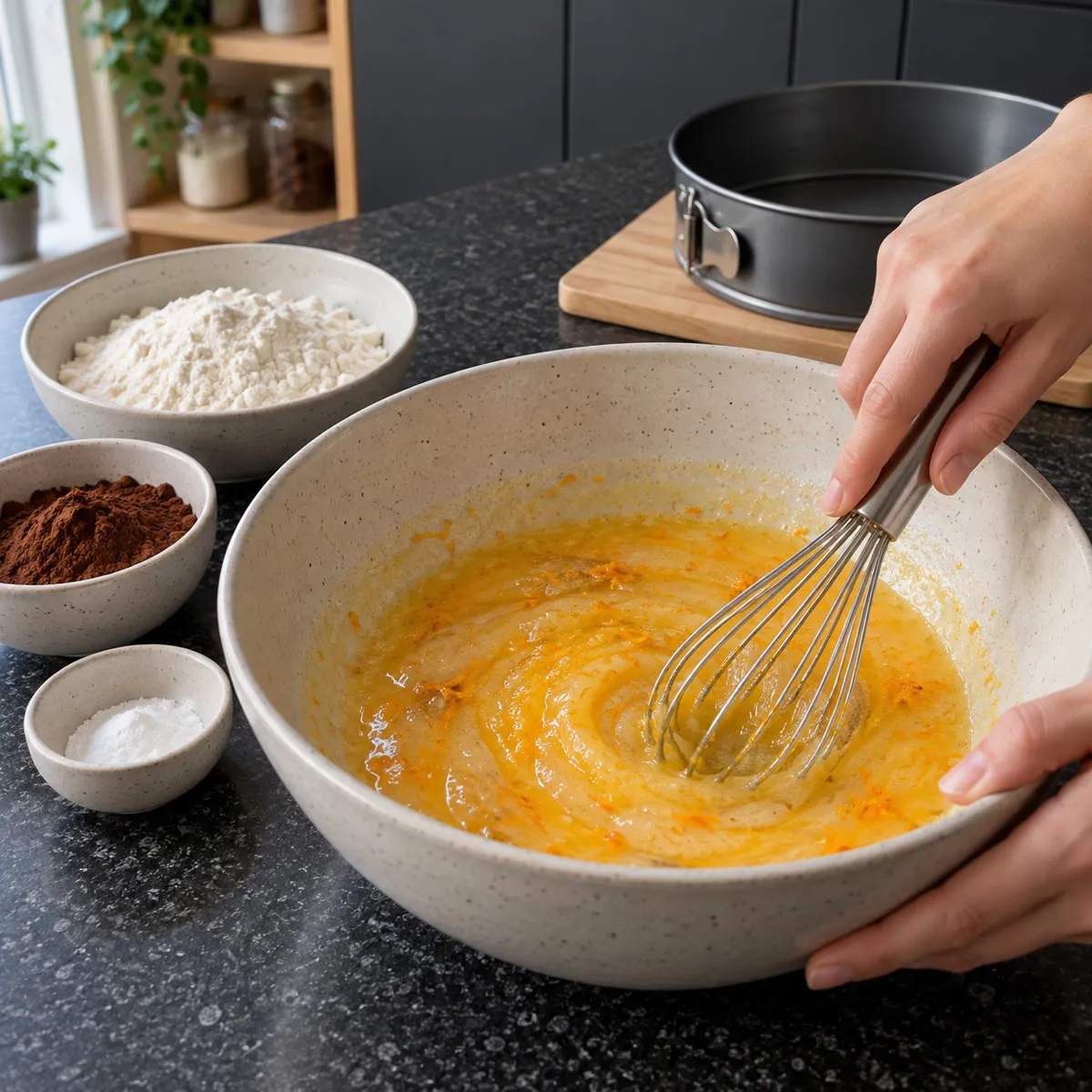
Put the eggs, caster sugar, sunflower oil, orange juice and orange zest in the large bowl. Whisk until the mixture is glossy and even, with no streaks of egg white and a fresh orange smell rising from the bowl.
Fold in the dry ingredients
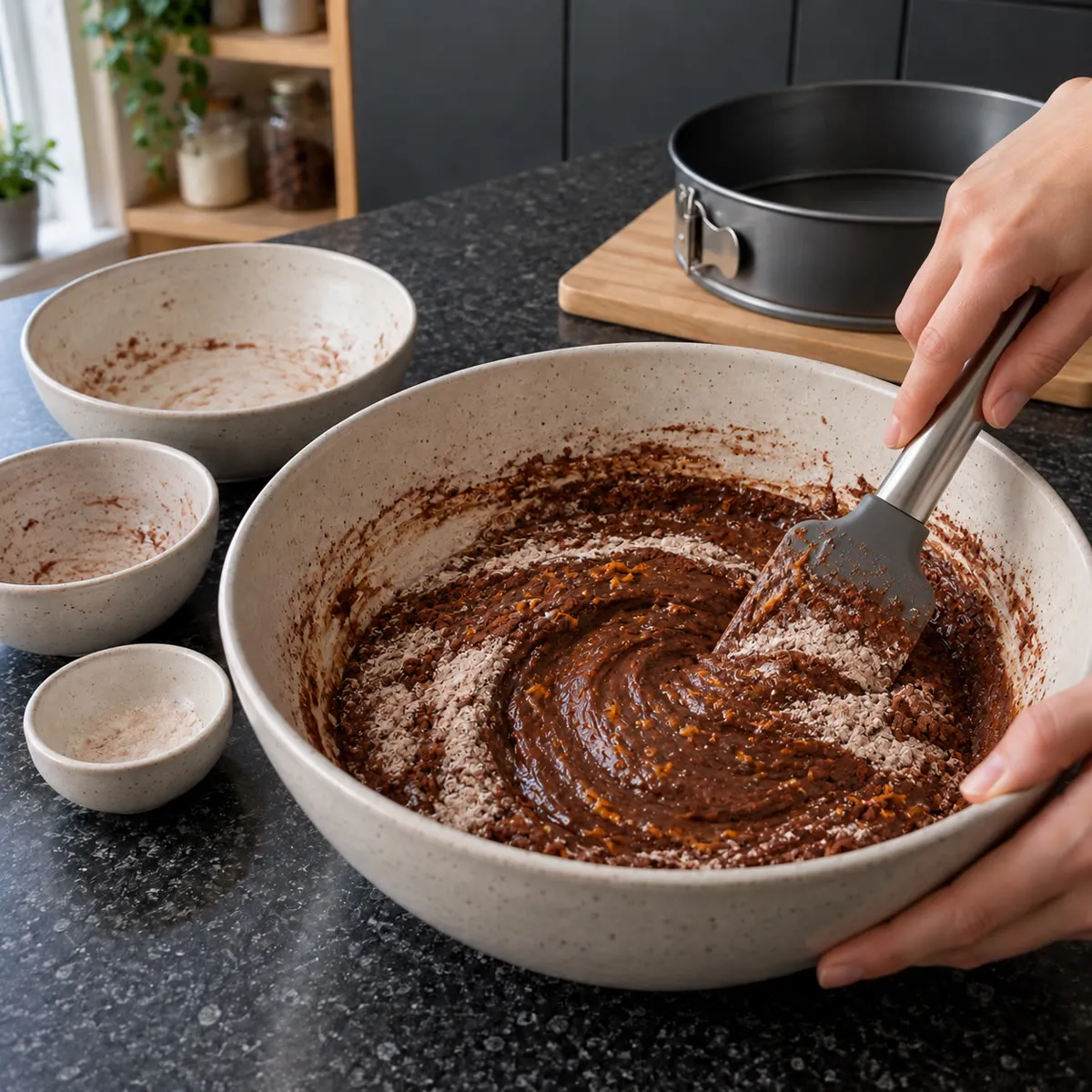
Sift the plain flour, cocoa powder and baking powder over the wet mixture. Fold with a silicone spatula until the batter is deep chocolate brown and smooth, with no pale pockets of flour at the bottom of the bowl.
Fill the tin
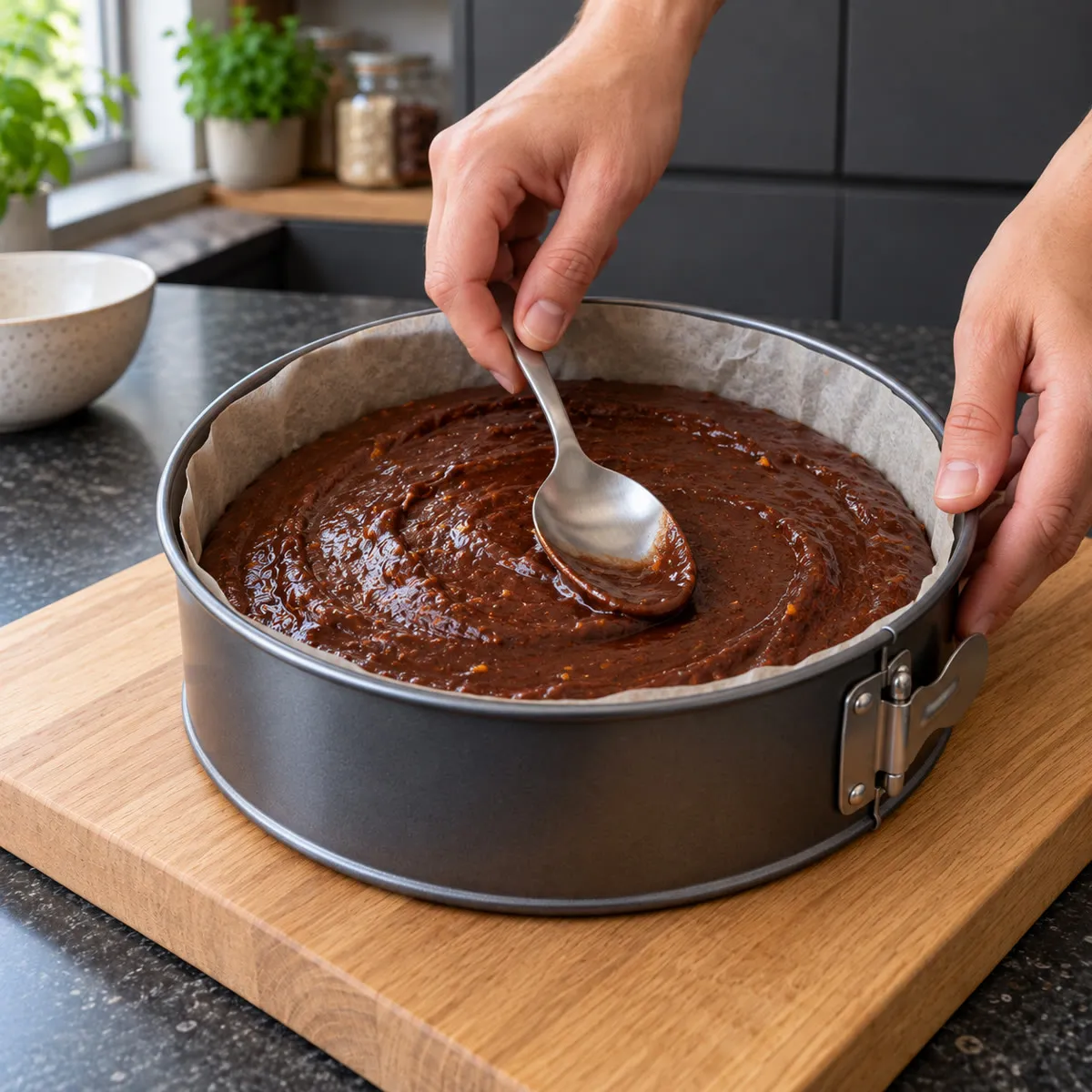
Scrape the batter into the lined springform tin and level the surface. It should settle into a glossy, loose layer with tiny flecks of orange zest visible against the dark batter.
Bake the cake
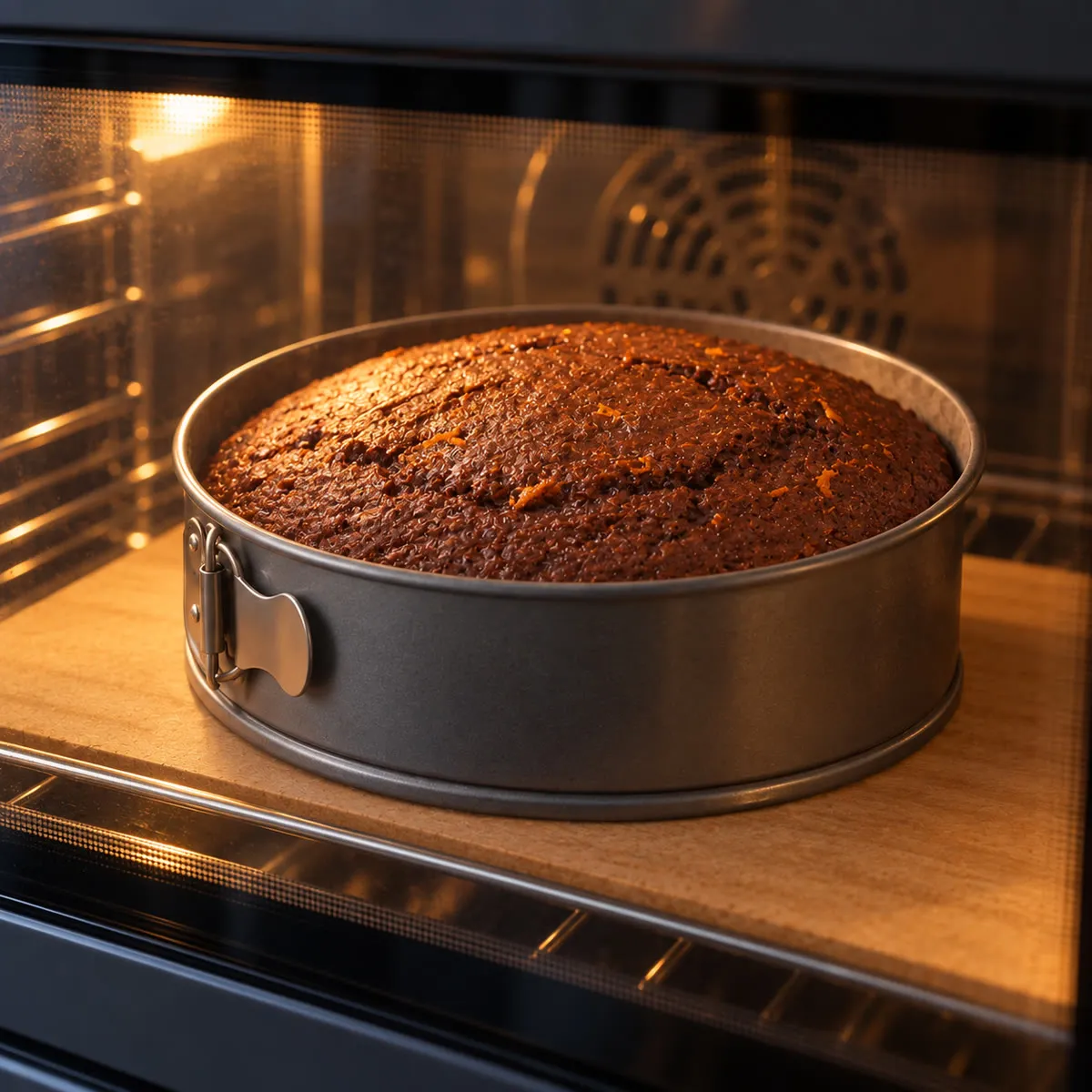
Set the tin on the middle shelf. Bake for 50 to 60 minutes. The surface should look set and cocoa brown, and the kitchen should smell of chocolate and orange. The cake is ready when a skewer pushed into the middle comes out with a few damp crumbs, and the top springs back.
Cool in the tin
Set the cake on a wire rack and leave it for 20 minutes in the tin. The top will settle slightly as the heat eases, while the sides should feel firm enough to hold their shape.
Release the cake
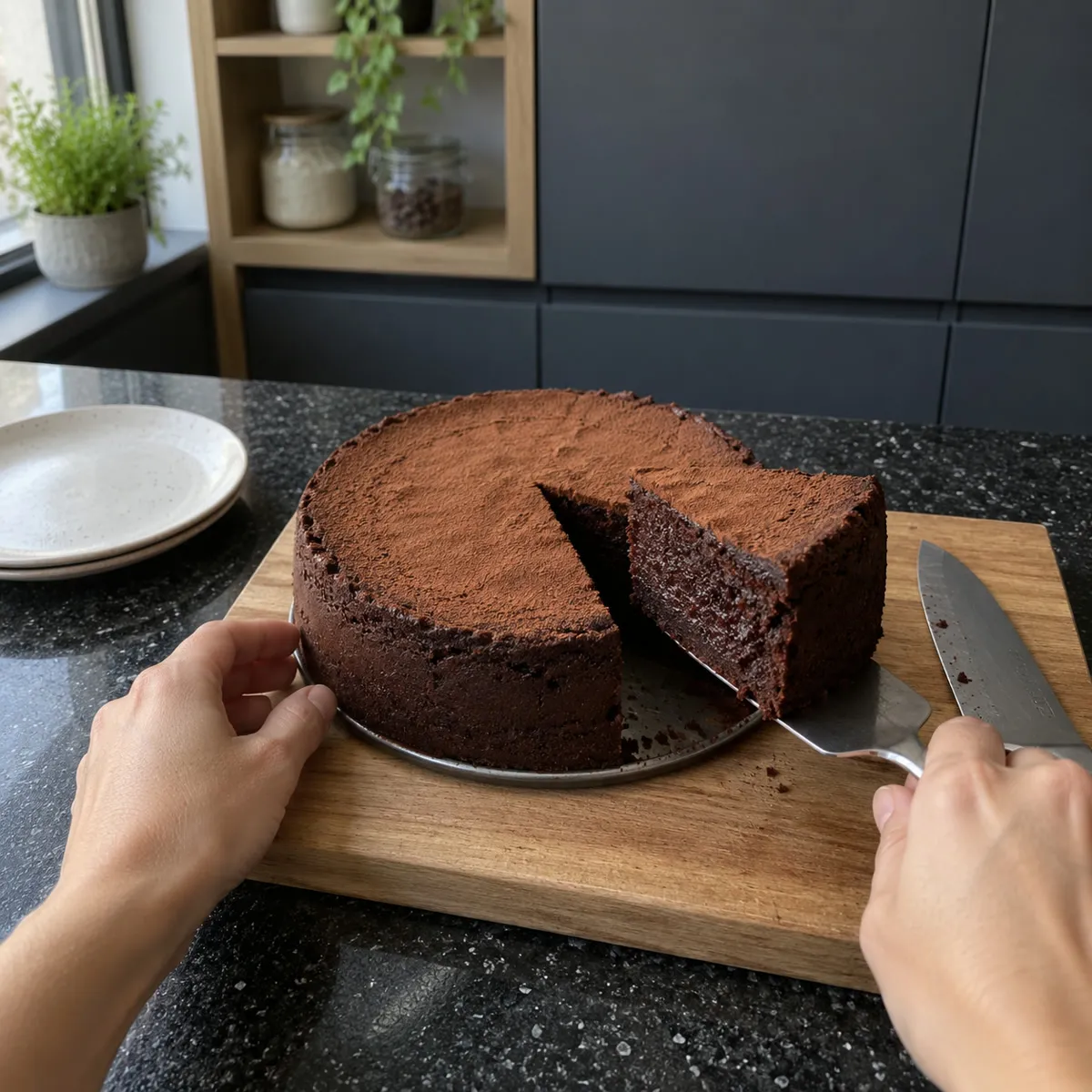
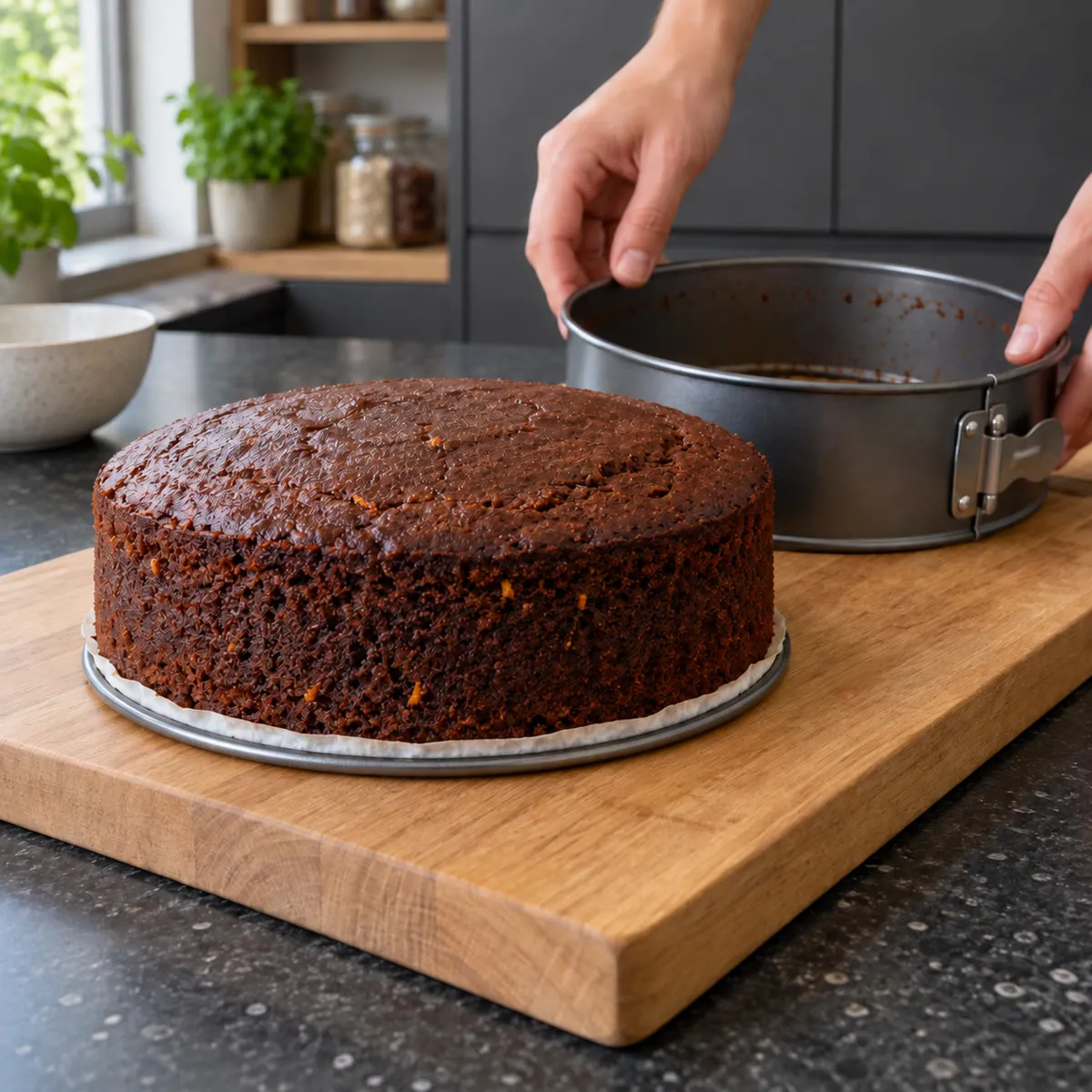
Run a thin knife around any spots that have caught the lining, then open the springform ring and lift it away. Leave the cake to cool for another 20 minutes. It should stand tall without the ring, with a firm outer edge and a soft centre that is warm rather than hot.
Make the chocolate orange sauce
While the cake cools, heat the double cream and orange zest in a small saucepan until steam rises and tiny bubbles appear around the edge. Put the dark chocolate in a heatproof bowl, pour over the hot cream and stir until the sauce is dark, glossy and pourable, with no pieces of chocolate left.
Slice and serve
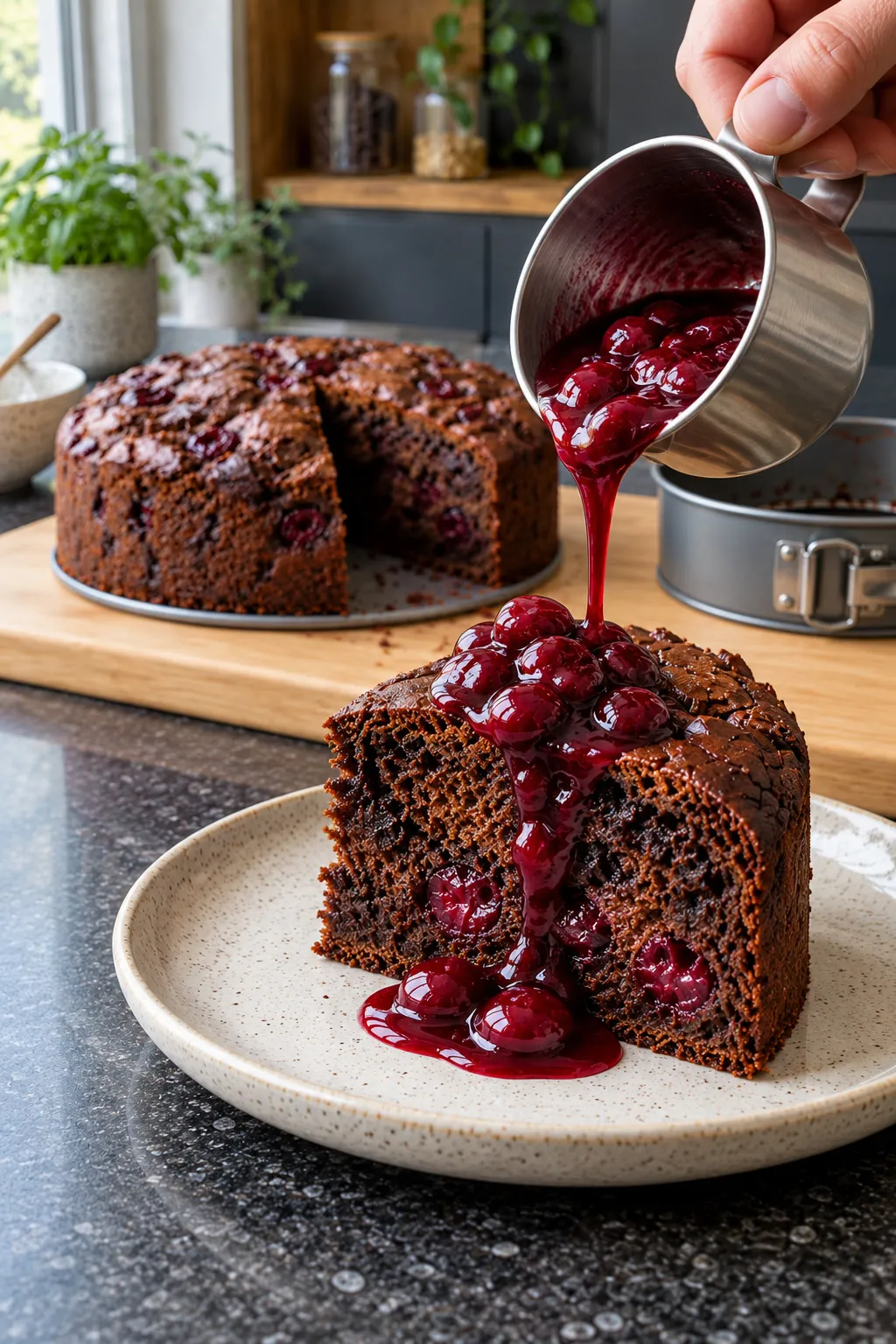
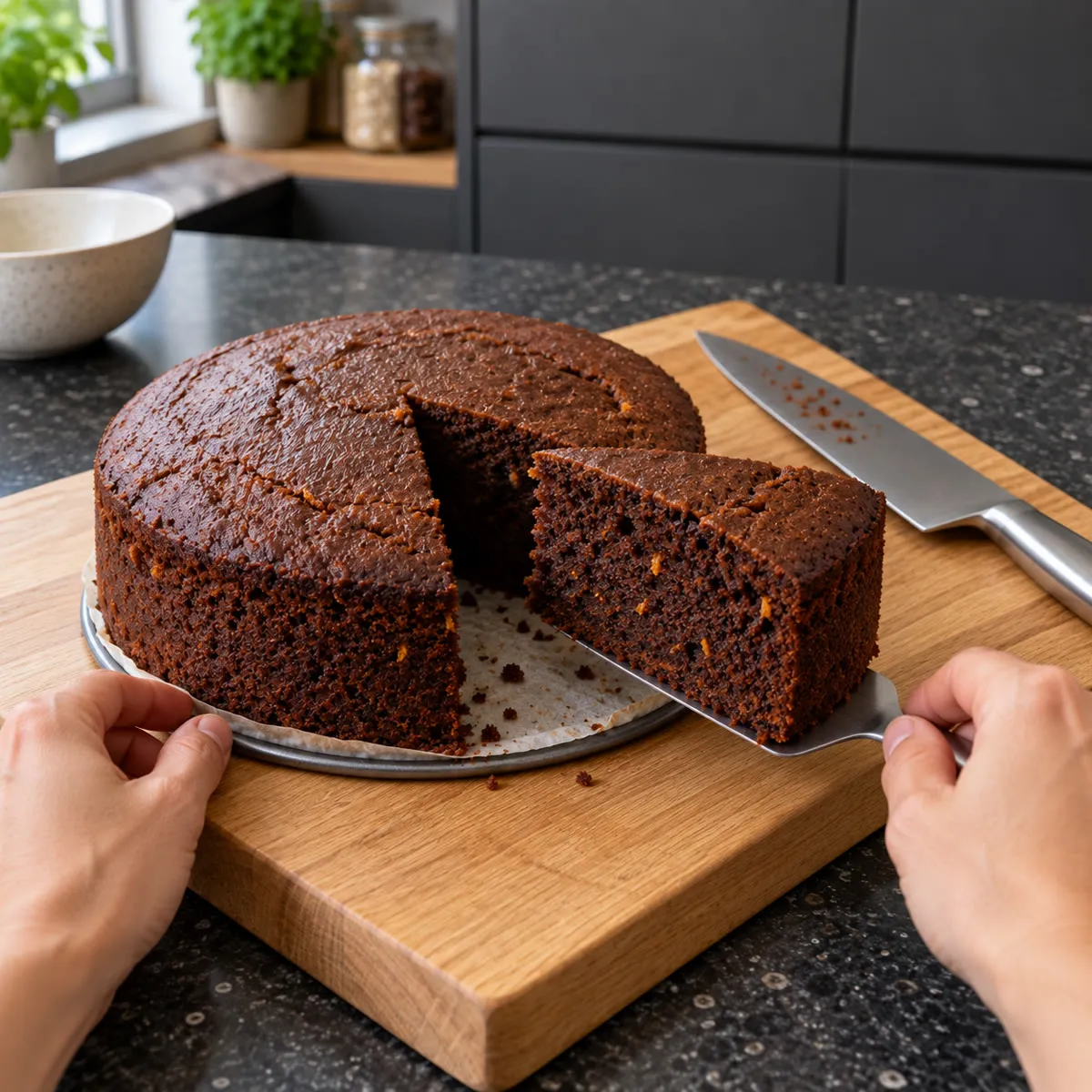
Cut the cake once the crumb is warm rather than hot, then lift out a wedge with a cake server. The slice should hold a neat edge while staying soft and close textured inside. Pour the warm chocolate orange sauce over each slice at the table.
Baker's notes
- Finely grate only the coloured surface of the orange peel. The white pith underneath can bring a bitter edge to both the cake and the sauce.
- The uncooked batter is looser than a creamed butter cake. It should pour readily into the tin rather than sit in stiff spoonfuls.
- The sauce becomes thicker as it cools. Warm it gently before serving if it no longer pours in a steady ribbon.
- Allergens: contains dairy, egg and gluten. There are no nuts or alcohol in the recipe, but check the chocolate label for possible nut cross-contamination if needed.
Keeping it Keep the cooled cake covered at room temperature for up to 2 days, or refrigerate it for up to 4 days and bring slices back towards room temperature before serving. Keep the sauce covered in the fridge for up to 3 days and warm it gently until pourable.
Questions, answered
Can I use self-raising flour instead of plain flour?
Yes. Replace the plain flour with the same weight of self-raising flour and leave out the baking powder. The crumb may rise a little differently because self-raising flour brands do not all contain the same amount of raising agent.
Can I use another neutral oil?
Yes. Rapeseed oil or another mild, flavourless oil will work in place of sunflower oil. Avoid strongly flavoured oils because they can compete with the orange and cocoa.
Can I use milk chocolate for the sauce?
You can, but the sauce will taste sweeter and will usually be softer because milk chocolate contains less cocoa solid. Dark chocolate gives a clearer contrast with the sweet cake.
Can I use bottled orange juice in the cake?
Fresh juice gives the cleanest citrus flavour, but plain bottled orange juice can be used if it contains no added flavouring. Keep the fresh zest, since most of the orange aroma comes from the peel.
If it goes wrong
- It sank in the middleSeven causes, told apart by the shape of the crater.
- It came out raw in the centreBrown outside, wet inside, and how to rescue the one you are holding.
- The caramel seizedIt is almost always fixable. The lump re-melts.